Ronnie Fieg
Ronnie Fieg is the founder, CEO and creative director of Kith.
Summary
Ronnie Fieg is the founder, CEO and creative director of Kith. At 13, he turned down an envelope of cash at his bar mitzvah to ask his cousin for a job, then spent 15 years working his way up from stock boy to buyer at David Z. He explains how growing up in Queens and working on 8th Street shaped his taste, how his first ASICS Gel-Lyte III collaboration landed on the front of The Wall Street Journal’s Pursuits section and why he still designs every product for himself first. Ronnie describes why Kith refuses to wholesale or license, why he opens new physical stores as online sales grow and why he believes luxury should mean how much people love what they buy. He also details how a failed white chocolate bread idea became Kith Treats, how he prices product so customers get more than they pay for and what he felt seeing all 1,800 of his shoe designs laid out in chronological order. Ronnie shares how an obsession with padel led to Kith Ivy, why he is expanding into hospitality with Ronnie’s and why growing up before the internet forced him to develop his own point of view.
Episode transcript
This transcript was generated using speech recognition software and may contain errors. Please review the episode audio before quoting from this transcript.
[David Senra]
I wish we just recorded the conversation we were just having, but I love what you just said. So you're like, "Hey, my favorite entrepreneurs cannot work backwards from money." Say more about this.
[Ronnie Fieg]
Yeah, it's true. Even some of the biggest companies in the world, like take Apple and Steve Jobs, who's one of your favorite, I guess, favorite icons-
[David Senra]
For sure
[Ronnie Fieg]
... ever, if not your favorite, right?
[David Senra]
One of them, yeah.
[Ronnie Fieg]
Okay. But when you see the product he was making, you can actually tell that there was passion behind trying to make product that was going to change his own life, right? And I felt like even then, when the iPod really changed the trajectory of the company, you could feel the passion through the product. And that legacy lives on. Even with the duo that we're seeing now, you could see that legacy live on. Is it on par with what Steve Jobs may have designed? We will never know. But ultimately, he created an ethos that I believe really transcended, and that feeling that penetrated everyone's lives really, affected us in so many ways. I don't apply that
[Ronnie Fieg]
to my business. It's just naturally there because when I grew up, I became passionate about my world at such a young age. And I think that that's the most important element of anyone's or any entrepreneur's success. If you listen to most of them, they'll explain how their passion started so young, so early in their lives. Whereas,
[Ronnie Fieg]
in my case, it started when I was 13, and I started working in a stockroom.
[Ronnie Fieg]
But even before then, I always wanted to dress fly in school, and my parents couldn't afford to buy me the things I wanted. So back then, I went to work strictly for the purpose of being able to buy my own shit and just dress the way I wanted to dress. And that's how it started. And I think the passion for that grew, and as I learned about product, it just grew more and more. But getting my foot in the door and knowing what I wanted to do from such an early age, I think, gave me the upper hand.
[David Senra]
But how does a 12 or 13-year-old kid get interested in fashion? Is this coming from hip-hop culture? What was going on in your life where it's like, "Man, I want to come to school dressed and fly."
[Ronnie Fieg]
So I'll tell you. So growing up, up until fourth grade, my parents sent me to a private school, to a yeshiva. And in fourth grade, they couldn't afford to send me there anymore. Actually, my grandfather was helping my mom send me to a private school. And then in fourth grade, they couldn't do it anymore, so they pulled me out, and then they put me in the public school closest to my house. So I grew up in Jamaica, Queens, so I went to PS 178.
[Ronnie Fieg]
And when I attended 178, it was a culture shock for me because it was so many different cultures. It was the biggest melting pot ever. And Queens is the biggest melting pot in the world. So we got to see, or I got to see,
[Ronnie Fieg]
from day one, so many different cultures in the way people were dressing and the styles. And really, there was a small crew of kids, there was six or seven of them, that befriended me right away. And these kids, that was back when Polo, Tommy, and Nautica were like-
[David Senra]
I remember this
[Ronnie Fieg]
... were really big.
[David Senra]
We're around the same age. I remember this.
[Ronnie Fieg]
Yeah.
[Ronnie Fieg]
Are you '82? What year are you?
[David Senra]
'84.
[Ronnie Fieg]
That era of like... And then going into middle school, it became even more important, so more important in the way that you were dressing. So I found myself really wanting... I used to have to borrow my friend's clothes.
[David Senra]
Dude, I had knockoff Tommy Hilfiger. I literally bought it at the swap shop in South Florida-
[Ronnie Fieg]
That was a good thing
[David Senra]
... because we had no money.
[Ronnie Fieg]
It was a good thing.
[David Senra]
And then I got called out at school. You want to hear an embarrassing story? I didn't even know. You know how these hustlers in South Florida are. They took old Wendy's uniforms. Like, the Wendy's-
[Ronnie Fieg]
Oh my God
[David Senra]
... the fast food place?
[Ronnie Fieg]
Yeah.
[David Senra]
You would give them like a-
[Ronnie Fieg]
A collared shirt
[David Senra]
... a collared shirt, right? And I go to the swap shop because we have no money, and you have these street vendors, right? And I'm like, "Oh, this is Tommy." I didn't understand what was going on. And I wore it to school, and they're like, "Dude, that's a Wendy's shirt."
[Ronnie Fieg]
A Wendy's shirt.
[David Senra]
I remember being 12 and devastated that I'm wearing a fucking fast food costume.
[David Senra]
Not costume, what's it called? A fast food uniform with a fake Tommy Hilfiger screen printed on it.
[Ronnie Fieg]
That's insane. I don't know. I don't think things have gotten that far.
[David Senra]
Dude, I haven't thought about that in 20 years. I can't believe that.
[Ronnie Fieg]
That's really crazy. There were a ton of fakes going around. And even though
[Ronnie Fieg]
back then, a 65 or 85 dollar shirt was like-
[David Senra]
This was 10 dollars. I should have known by the price.
[Ronnie Fieg]
Oh, yeah, you should have known by that. I could have told you back then. You needed me as a friend. I would have kept you safe.
[Ronnie Fieg]
But in school, that's what really...
[Ronnie Fieg]
What we were seeing around us, that's what we really wanted to be. And my older sister, she was working and making money buying product for herself. And then some of the kids in school, they had the money, or their parents had the money to buy them the product they wanted. And that's really what fueled
[Ronnie Fieg]
my kind of passion for wanting to work. Just like, I wanted to make money so I could buy my own product and buy my own clothing. So at 13, at my bar mitzvah,
[Ronnie Fieg]
my mom's first cousin, my second cousin, who was David Z, he owned shoe stores in the city,
[Ronnie Fieg]
he offered me an envelope of cash because he knew that my parents were paying off for my bar mitzvah party with the money I was getting as gifts.
[David Senra]
No.
[Ronnie Fieg]
So he offered me... I was going to the bathroom during the party, and he offered me an envelope of cash, and I told him, "Keep the envelope. I want a job." I was 13. And he was like, "Are you sure?" There was some money in that thing. So,
[Ronnie Fieg]
I was like, "Yeah, no, I'm sure. I want a job." And I started the next day. And I started working in the stockroom in a warehouse on Broadway, where David Z had a bunch of stores. And I worked there throughout the summer.
[Ronnie Fieg]
And then after that, I worked in the stockroom in 8th Street, which was probably the most important part of my upbringing and also the most influential part of my life, because that's where I got to see...
[Ronnie Fieg]
It was really the epicenter of culture, 8th Street between 5th and 6th Avenue. During the weekend, they would shut down the block. There would be like- Basically, like, block parties every weekend there, and the cops would let it rock, and then the cars were parking diagonally because there were so many cars. And that's where people would come to get, whether they were coming to get their fitted or Grace Papaya was on the corner, or Phat Beatz where DJs would come and get their vinyl. Sam Goody was across the street, and then you had a bunch of different shoe stores and also apparel shops where people were buying their Iceberg apparel or they were buying... Back then, brown shoes and boots were running the streets of New York. So, like today, when you see the obsession over kids and their Jordans or
[Ronnie Fieg]
kids buying sneakers the way they are today, they were buying boots, like hiking boots back then. And that's when New York City was colder and it was snowing a lot more, and for a good part of the year, you needed to have boots. And David Z was the number one location for those products. So, you're talking about brands like Asolo and Technica and Red Wing, and we had Polo, like the Polo cookie boots and the hiking boots, the RLX boots and Timberlands,
[Ronnie Fieg]
Trezeta, Dolomite, like all Bear AKU, like all these Gore-Tex hiker boots. Hiking boots were just everywhere in New York City in that culture. It was still a subculture, but it got so big. Like, people were driving from different states to come buy these products because they were Italian brands making product in Italy, and it wasn't massively distributed.
[David Senra]
But when do you go from admiring what other people are making to saying, "Hey, I'm going to do my versions of this?"
[Ronnie Fieg]
That came later. So, I worked as a stock boy,
[Ronnie Fieg]
receiving product, getting one-on-one time with the product, then becoming a salesperson, then becoming an assistant manager, then becoming a manager, assistant buyer, and then buyer/general manager.
[David Senra]
So this is just you learning the business, not thinking like... Let me ask you a question. Maybe I should start here. If somebody doesn't know who you are-
[Ronnie Fieg]
Yeah
[David Senra]
... and say, "Hey, what do you do?" How do you describe yourself?
[Ronnie Fieg]
I do a lot more than design. So, I'm the CEO, creative director, and CMO, I would say, of the company. So CEO, CMO, and
[Ronnie Fieg]
creative director. And I think the creative director portion of my role
[Ronnie Fieg]
has evolved over time, but I am ideating and part of every design of every product that we put out. So it's hard for me to describe what it is that I do-
[David Senra]
Yeah
[Ronnie Fieg]
... because I do a lot.
[David Senra]
Yeah.
[Ronnie Fieg]
And a typical creative director wouldn't be doing the buying or merchandising, and I do most of those things. So, I have my hands in everything product-wise, and then I design the spaces. I'm heavily involved in the full 360
[Ronnie Fieg]
degrees of the business,
[Ronnie Fieg]
even down to the experience that people have when they walk in, the F&B portion of what we do with Get Treats and now Ronnie's. So, there's a lot that I do, so I can't really describe it, and it's hard for people to get a grasp on what it is that I do if you're not following it, because it's been like building blocks since the beginning. It's not like I've given up any responsibilities. I've just added on.
[David Senra]
You're kind of like... I met you outside, and your car is very interesting. And I stuck my head in, and I was like, "Oh, dude, this is nice." And you're like, "Welcome to my world."
[Ronnie Fieg]
Yeah, it's like-
[David Senra]
You're kind of like building your own entire world.
[Ronnie Fieg]
Yeah. And by the way, I'm head to toe in my product, socks and underwear.
[David Senra]
We don't have to see that, but I will take your word on it.
[Ronnie Fieg]
Yeah, just take my word for it. And I'm really living the product. I live and breathe the product that I create, and I'm building products for myself.
[Ronnie Fieg]
And I think that people know that, so they know that there's a lot of love that goes into it. So if I'm building products for myself and I want to wear the product that we make,
[Ronnie Fieg]
I also, up until very recently, was fitting four hours a week. I was the fit model for the product that we put out. So, the brand puts out more than 5,000 styles a year of product between men's, women's, and kids, and accessories and footwear. We built a universe of product, and it's been a really great evolution from the beginning. So if you ask me what it is that I do, I-
[David Senra]
The answer is everything.
[Ronnie Fieg]
I'm a world builder. I
[Ronnie Fieg]
built myself a world that I live in.
[David Senra]
But this is interesting. Why would it be important for you to be the fit model? Because literally, this is for me first.
[Ronnie Fieg]
No, it's a great question because it actually creates efficiencies when we get a sample in and then I fit the product, and during the fitting, I make all the decisions that I need to make for that one product. So I fit the product, and then I'm deciding if the fabric is right for that body. I'm making alterations to the body. Sometimes I'll even drop it and then come up with ideas on what we need to do to evolve from that body or how a specific design can be better. So I'm giving direction
[Ronnie Fieg]
live during a fitting. And
[Ronnie Fieg]
the team is all there, so I have 20 people at a fitting, and you have your materials team, you have your merchandisers, you have your designers,
[Ronnie Fieg]
and then you have the VP of product there and some assistants, and there we're making real decisions. So,
[Ronnie Fieg]
we'll make the decisions on that product, and then we'll wait for the second sample to come in, and we got to fit that, too. I think a lot of these brands cut corners. I've spoken about this a few times with different people about how the industry cuts corners. And sometimes you walk into a store and you try something on, you have a shirt from that brand that fit well, but then you try it on and it doesn't fit well, and you're like, "Well, why'd that happen? I came back for the same style." And it's because brands will want to create another version of the same style but not fit it again. So they'll apply a different fabric to the same body, but they won't fit it again, and it drapes differently, it fits differently, and they cut corners. And even there are fashion houses that do that, where you'll walk into a very expensive store and try some product on, and it doesn't fit. It fits like shit. So I'm very meticulous to every detail only because my closet-
[David Senra]
Every season, I wipe it out, and then it gets replaced with the new season. So, if I'm going to be wearing the product, it better fit properly, as I'm like the representative of the brand.
[David Senra]
I want to tell you about the presenting sponsor of this podcast, Ramp. I have been reading a lot about SpaceX lately. SpaceX is one of the most valuable businesses in the world, and one of the main themes in the history of SpaceX is constantly attacking and questioning your cost. Ramp helps many of the most innovative businesses in the world do exactly that. The median company running on Ramp cuts their expenses by 5%. And one thing SpaceX has demonstrated is that a religious dedication to controlling costs can help actually increase revenue because you can pursue opportunities you couldn't otherwise. And we see that in the Ramp data, too. The median company running on Ramp also grows their revenue by 16%. So when you're running your business on Ramp and your competitors are not, you have a massive competitive advantage that compounds over time. Ramp is the only platform designed to make your finance team faster and happier. Many of the top founders and CEOs I know run their business on Ramp. I run my business on Ramp, and you should too. Go to ramp.com to learn how they can help your business save time, save money, and grow revenue. That is ramp.com. So I love how you've used the word like love-
[Ronnie Fieg]
Yeah
[David Senra]
... like several times. We started the conversation, we were like, "Hey, the people I admire the most, entrepreneurs that came before us, maybe some even operating today, it's just like they're doing it for like out of... They're not doing it for money. They make money because they love it so much, and if you love it so much, you wind up building great products. And turns out, if you maintain control and build a great product, you're going to wind up with the money anyways."
[Ronnie Fieg]
Right.
[David Senra]
So, the love of this, let's go back to like the story you're saying in the second. I'm kind of learning almost like the mechanics of the business as a kid.
[Ronnie Fieg]
Yeah.
[David Senra]
Right? This is before you're like, "I'm learning how the business exists or a part of the business exists."
[Ronnie Fieg]
Yeah.
[David Senra]
Before you kind of put your own spin on it.
[Ronnie Fieg]
Right. It was-
[David Senra]
So when you're like, "Hey, I actually have my own ideas." So me and you both know Jeff Selznick, who was on this show.
[Ronnie Fieg]
Right.
[David Senra]
And he told a very similar story where he was just like, "Man, I was obsessed. I was like eating at every single restaurant. I was like the weird kid that come home from after middle school and watch PBS cooking shows."
[Ronnie Fieg]
Yeah, I saw that.
[David Senra]
And then he's like, "Then I'm like eating at all these restaurants, and I'm creating media about this." And he's like, "You know what? I got my own goddamn ideas on how this should be done."
[Ronnie Fieg]
Right.
[David Senra]
When was that turning point in your life?
[Ronnie Fieg]
I was so fucking obsessed with footwear. So, like when Kith opened, and we'll go back, I'll go back to your question in a second. When Kith first opened in 2011, we were a multi-brand footwear shop, and then I had projects with brands where I was working on my own versions of some of these iconic footwear silhouettes for the store. And then from there, it expanded to be a lot more. But I'm going to rewind back because
[Ronnie Fieg]
I was a footwear guy, you know, and strictly footwear until 2012, 2013, right? So
[Ronnie Fieg]
I was basically buying
[Ronnie Fieg]
upwards of 30 million dollars at retail a year from so many different footwear brands. I was the sneaker guy
[Ronnie Fieg]
before I became the shoe and boot guy when I started working. I was wearing like, Nikes were my thing before I started working in this brown shoe and boot retailer. And then
[Ronnie Fieg]
I helped David because the trend of brown shoes and boots, as the weather actually got warmer and the seasons had kind of extended, and the winter kind of like shrunk to like three months instead of the four or five months that we were used to. Because it was getting cold in October back then, and then it was cold up until April, and now it's a bit different from that. So athletic footwear started to really become a trend in New York City and kind of take over that business of the brown shoe and boot world. So I helped David transition from brown shoes and boots to athletic footwear. And he knew that I was like obsessed with sneakers, so
[Ronnie Fieg]
I was going to these trade shows and helping open new accounts, new footwear accounts, and then starting as an assistant buyer, being put on some of these accounts. And we built an incredible business with Onitsuka Tiger, which is Asics, and it wasn't sports style yet. It was just Onitsuka for what we were carrying, but the sales rep knew that I was a sneakerhead and knew that I was collecting product because I was collecting sneakers since like '95, right, when I turned 13. That was the first pair of shoes that I bought twice. It was a Flight 95 Jason Kidds. I don't know if you remember this, with the carbon fiber in the midsole.
[David Senra]
Uh-huh.
[Ronnie Fieg]
And it kind of looked like a spaceship, and it was the first like iteration of that kind of shoe was a basketball shoe.
[David Senra]
But were you buying to flip?
[Ronnie Fieg]
No, back then there was no flipping.
[David Senra]
Okay.
[Ronnie Fieg]
I was buying a second pair because I loved them so much.
[David Senra]
Got it.
[Ronnie Fieg]
And the Air Max 95, the Neon 95s were like,
[Ronnie Fieg]
the design language was just something we'd never seen before. I was just gravitated towards it.
[Ronnie Fieg]
Come 2006, when I helped build Onitsuka Tiger to a multimillion-dollar business for David,
[Ronnie Fieg]
they knew that I was heavy into footwear collecting. They knew I was a sneaker kid, so they opened up the archive for me and they were like, "Hey,
[Ronnie Fieg]
do you want to look through some of these styles and work on it?" And I was like, "What do you mean by work on it?" "Oh, you could create your own version of the shoe." And I was like, "Oh." So David was already doing this with boots back in the day, but they weren't branded like David Z on the boots, but they were considered SMU, which is called a special makeup.
[David Senra]
Mm-hmm.
[Ronnie Fieg]
So he was doing it with Timberland. In fact, like in 1997, David had an idea of making a gray construction Timberland boot, and Timberland never made a gray boot in their history. It was mostly like for performance purposes in browns and blacks. If you were either wearing it for construction or wearing it to hunt,
[Ronnie Fieg]
they were really into the performance aspect of the brand. So David's idea of making a gray construction boot was like,
[Ronnie Fieg]
I was like, "Holy shit, what is that?" People saw that and were instantly... Like, we sold like 10,000 pairs of that boot in a couple of years
[Ronnie Fieg]
with no internet, right? So, like, people coming into the store- And that was a product that we had, and I saw that as a salesperson on the floor. I saw how people gravitated towards something they couldn't find anywhere else. So, when ASICS offered me the opportunity to work on a shoe and I'm looking through the catalog, I found a shoe.
[David Senra]
How old are you when this is happening?
[Ronnie Fieg]
This is in 2006, so I was 23.
[David Senra]
Okay.
[Ronnie Fieg]
Right? I'm looking at the catalog and I see a shoe that my mom bought me when I really wanted a pair of Reebok Pumps. She left me outside the store. I was crying. I was eight years old.
[David Senra]
Mm-hmm.
[Ronnie Fieg]
And she brought me a pair of ASICS Gel-Lyte IIIs for 50 bucks or something, instead of buying me a pair of pumps that were like 110 or 120.
[David Senra]
I wanted the pumps too. The thing that...
[Ronnie Fieg]
Yeah. That just wasn't happening, right?
[David Senra]
Yeah, no.
[Ronnie Fieg]
The D. Browns or the Victory Pumps, they were incredible. So,
[Ronnie Fieg]
I had to wear these Gel-Lyte IIIs, and I fell in love with them.
[Ronnie Fieg]
And when I saw it in the catalog, I was like, I knew that that's the shoe that I wanted to work on. And also, in the world, and I was collecting, and at that time-
[David Senra]
Wait. So when they're opening the archive, they're meaning-
[Ronnie Fieg]
Yeah
[David Senra]
... "Hey, these are past models. We're not doing it. They're not manufacturing, they're not creating anymore?"
[Ronnie Fieg]
Correct.
[David Senra]
Okay.
[Ronnie Fieg]
Yeah.
[David Senra]
And so why don't you make-
[Ronnie Fieg]
So they opened up old catalogs.
[David Senra]
Interesting.
[Ronnie Fieg]
Yeah, from 1990.
[David Senra]
That's even better because you just mentioned how important it is to have product that's differentiated you can't get anywhere else.
[Ronnie Fieg]
That's exactly why I decided to work on that shoe. And I didn't know if people would gravitate towards that model. So, it was 252 pairs were the minimum, and we needed to commit to 1,000 pairs for the style to be made. And I worked on three colorways of the style, 252 pairs of each, and then they took the other 250 and then offered it to a store in Amsterdam called Patta,
[Ronnie Fieg]
and that's how the silhouette came back in 1990. We created that shoe, and it took off.
[David Senra]
Well, even back then, though, when you were like, "Okay, they offered me a silhouette. I can put my spin on this," was your North Star just like, "Hey, I'm just going to make the shoe look like what I would want to wear"?
[Ronnie Fieg]
Correct.
[David Senra]
So, same to this day?
[Ronnie Fieg]
100%.
[David Senra]
Okay.
[Ronnie Fieg]
I'm always creating products for myself. That's the red thread through all the product, at least the men's product and even the kids' product of what I want to put my girls in. And now with the women's product, it's like my wife, my mom, my sister, three different generations. And I know what my wife wants to wear, I know what my mom wants to, I know what my sister want, and I'm really designing for the people. Either if it's not for myself, it's for somebody that's the muse.
[David Senra]
Mm-hmm.
[Ronnie Fieg]
And I think that on the footwear side, if you look through this book,
[Ronnie Fieg]
that was in '07, my first shoe released, and it had a slow start for the first day. I had an event. We sold 50 pairs. Then the next day it released in the store. We sold a few pairs, but one of the pairs that sold was to an editor that came by from the "Wall Street Journal" and asked me a shit ton of questions about the shoe. I didn't know he was an editor, so I'm giving him all the information I just gave you, and then he wrote about it. And then the next day, I came in, and my mom's calling me as I'm biking to work and was telling me
[Ronnie Fieg]
that it's on the cover of the "Wall Street Journal."
[Ronnie Fieg]
Like the shoe, my specific... Because it was an article about limited shoes.
[David Senra]
Yeah.
[Ronnie Fieg]
And then there was a picture of the shoe that I worked on in the pursuits section on the top, right next to the word pursuits. It was right there. There was a line down the block, and the shoe sold out instantly. And on the same day, the CEO of North America for Adidas was moving into his office across the street and saw the line and walked downstairs and was like, "What's going on over here?" And I was working in the store, right? [Speaker 1 laughing] Because I'm buying and I'm
[Ronnie Fieg]
working on this project, but I'm still managing the store.
[David Senra]
Yeah.
[Ronnie Fieg]
Right? Like the flagship store, which was 556 Broadway between Prince and Spring. So the guy walks in,
[Ronnie Fieg]
the CEO of North America, and he's like, "Hey, what's going on here?" So I'm telling him what's happening, and he was like, "You worked on the project?" He was like, "Yeah," and I had the "Wall Street Journal" there, the copy, because my mom called me. I picked one up.
[David Senra]
Yeah.
[Ronnie Fieg]
So he was like, "Let me take a look at that." And he's looking at it, and he's reading it, and he was like, "So you're behind this?" And he was like, "What are you doing right now?" I was like, "Well, I'm working here." "When do you have lunch?" And I was like, "I can go off in like a half hour, an hour, whatever." So he met me, and then we took a walk to the Adidas store, and we walk into the store, and he was like, "Well, what would you want to work on here?"
[David Senra]
Whoa.
[Ronnie Fieg]
And then I picked up the shell-toe.
[Ronnie Fieg]
And then the second project was called the Black Tie, and at the time, I was dating a girl
[Ronnie Fieg]
that was part of the design process of Goldbar down on Broome Street.
[David Senra]
What's Goldbar? I don't know what that is.
[Ronnie Fieg]
Goldbar is a beautiful lounge that was the first of its kind to be kind of like when all these clubs were really big, it was this really intimate, small room. There was nothing quite like it since. It became this really energetic spot that everybody, the downtown kids were all gravitating towards this place at night. The employees were in these black suits, and the whole place was gold, and it was beautiful. I remember she was working there at 4:00 in the morning, gold leafing the ceiling, and I was helping her. I got up on the ladder and was helping her paint the ceiling of the space. So I was really in love with the space, and then it opened, and I became good friends with the manager. And then I was thinking one day, I was like, "What am I going to do with this shoe?" And I'm holding the shoe in front of me. I was like, "I'm just going to make
[Ronnie Fieg]
the shell-toe a dress shoe and then have the employees at Goldbar wear these shoes." And then I ended up shooting the staff from Goldbar for the campaign of the shoe, and I called it the Black Tie, and the shoes came with a black tie, with an Adidas tie.
[Ronnie Fieg]
And that became the second shoe that I worked on, and then from there, it kind of snowballed, and I was doing this at David Z. So there was-
[David Senra]
You still have a more than full-time day job.
[Ronnie Fieg]
Oh my God. So this became a pretty substantial business where we were selling these products that I was working on.
[David Senra]
Yeah.
[Ronnie Fieg]
And it grew and grew and grew, and that became a pretty big business relatively quickly.
[David Senra]
But where's the money going? When you say it's a big business, it's going to David, right?
[Ronnie Fieg]
It's going to David, yeah.
[David Senra]
So it's not you. You don't have any kind of equity, economic tie, nothing.
[Ronnie Fieg]
No.
[David Senra]
You're essentially just talent.
[Ronnie Fieg]
Yeah, correct.
[David Senra]
Yeah.
[Ronnie Fieg]
Correct. And so I was the buyer.
[Ronnie Fieg]
I was a curator for this product, and then I was also a general manager, like managing also the shops, right?
[David Senra]
Sounds very similar to when I asked you, "What do you do today?"
[Ronnie Fieg]
Yeah.
[David Senra]
Everything.
[Ronnie Fieg]
Yeah. Basically, it was a little bit of everything, right?
[David Senra]
Yeah.
[Ronnie Fieg]
And he had a team of people, but I was young, energetic, and leading a store that was for the masses. When I first started at David Z, it was a subculture. By the time I became a buyer for David Z, it was for the masses. David took the route of
[Ronnie Fieg]
opening stores on Broadway and catering to the tourists. I wanted to be about the local, and I was
[Ronnie Fieg]
very much into the culture of collecting. So, I was already starting to collect footwear way before then, and I was trading with Japan and product that David wasn't carrying. I was collecting Nikes at this point.
[Ronnie Fieg]
And David had a Nike account for a brief time, but at that time, there was a lot of competition with these individual businesses that were kind of like running game with the Nike account. The Nike account was a big deal back then, you know? Because that was the brand that was driving a lot of the revenue. So he didn't have Nike, so I was trading and I was collecting because I built great relationships in the industry. But basically, in 2009, I already
[Ronnie Fieg]
started thinking about, "Hey, this is incredible what I'm doing, but also, I feel like I could be doing this in a way where I could cater to the consumer that's about this product full-time, and not only when I'm releasing this product, they're coming in."
[David Senra]
What do you mean full-time?
[Ronnie Fieg]
Full-time meaning when I was working on these type of projects, like that Asics shoe, for example, that kid that was buying that Asics shoe was not necessarily shopping at David Z for other sneakers.
[Ronnie Fieg]
That kid that was focused on collecting and about special athletic footwear, like elevated and very limited athletic footwear, was coming back for the product that I was creating, but it wasn't coming back as a daily consumer.
[David Senra]
So the idea is like, we have this very special differentiated product, but it's 10%, I'm making up numbers, 10%. There's 90% of stuff you can get anywhere.
[Ronnie Fieg]
Correct.
[David Senra]
Why don't we just focus on the special, is what you're saying?
[Ronnie Fieg]
Right. And I wanted to do that, but that wasn't the roadmap for David.
[David Senra]
I got to interrupt you. I got a funny story, though, because like you mentioned Steve Jobs being one of my heroes, and I love that he's just completely unfiltered. And so, this is a few years before he died, and at the time, there was a new CEO of Nike. Because he loved brands.
[Ronnie Fieg]
Right.
[David Senra]
And he's like, "Nike's one of the greatest brands of all time." He thought Sony was a great brand, Polaroid, Apple. He's like, "Love people that build these brands that-
[Ronnie Fieg]
Soulful brands.
[David Senra]
Exactly. They evoke emotion is the way he would put this.
[Ronnie Fieg]
Exactly.
[David Senra]
And he's like, "Steve, do you have any advice for me?" He's like, "Nike makes some of the best products in the world, but you also make a lot of crap." He's like, "Just get rid of the crap and focus on the good stuff." That's exactly the realization you're having at this point.
[Ronnie Fieg]
But the crap was still generating a lot of money.
[David Senra]
Yeah, but Steve didn't give a shit.
[Ronnie Fieg]
And I don't give a shit. So that's where me and Steve are alike, right? And to me,
[Ronnie Fieg]
I saw an opportunity in being passionate about 100% of the things I was doing, not about 10 to 15% of the things I was doing.
[David Senra]
Man, that's an important insight. I don't want to skip over that.
[Ronnie Fieg]
Yeah.
[David Senra]
That's super important.
[Ronnie Fieg]
Yeah.
[David Senra]
I'm spending 85% of my day on stuff I don't care about. Just get rid of the crap. Because this is what we were talking about earlier off camera, and maybe we'll bring this into discussion, is just like, you feel it. You feel when there's love behind what people are doing.
[Ronnie Fieg]
Substance.
[David Senra]
It's just like they do things that are non-economic decisions.
[Ronnie Fieg]
Right.
[David Senra]
Right? The idea, let's go back to Steve, where it's like he insisted that you can't open MacBooks. You couldn't open the Mac back then. But when you did open it, it was beautiful. It looked like it was a piece of art, and everything was organized. No one was going to see it but him.
[Ronnie Fieg]
Right.
[David Senra]
And that was his point. He's like, "I don't care if other people see it." And he learned that from his dad, who was a carpenter.
[Ronnie Fieg]
Yeah.
[David Senra]
He's like, "You're not going to use a..." He goes, "Listen, we're building a cabinet or a dresser. What do people do? Put dressers on the wall. You don't see the back of it."
[Ronnie Fieg]
Right.
[David Senra]
So people that don't give a shit, they use crappy wood. We're not going to do that because we know it's there.
[Ronnie Fieg]
And that's the difference between being such an active founder and being the end user of the product that you make.
[David Senra]
It's also what's required for greatness. Patrick O'Shaughnessy is like my brother, one of my closest friends. You went on his show, and we were talking. We were upstairs with one of the greatest entrepreneurs living right now. He's just this maniac. He's just obsessed with operational excellence. And we were talking about his competitors and stuff, and Patrick made the observation. He's like, "Man, it's amazing. It's like everything is shit." And it doesn't matter what
[David Senra]
category or industry you compete in. He's like, "There's two to three guys. There's two to three guys in every single one that are doing great shit, and then a whole sea of mediocrity."
[Ronnie Fieg]
Yep. And the mediocrity is when you're working backwards from money.
[David Senra]
Yeah.
[Ronnie Fieg]
Right? So when it's about the money and not about the product, you could see that. It's transparent today to people, I feel like. More than ever before, actually. As this generation starts to steer back to substance, as you see vinyl start to pick up, and as you see the mom
[Ronnie Fieg]
and pop stores kind of have this resurgence into people looking for discovery. People want to discover things
[Ronnie Fieg]
in real life. And I think that the digital world has cheapened information, and information comes in the form of art sometimes. And it's like, you could pass over certain things by not touching and feeling them. You wouldn't understand the substance within the product. So,
[Ronnie Fieg]
I'm a firm believer of that because half my life is pre-internet, kind of like yours, right? And I think the pre-internet portion of my life-
[David Senra]
Half our childhood, we should say.
[Ronnie Fieg]
Yeah.
[David Senra]
No, because the internet came around early. I was on AOL in '97, '96.
[Ronnie Fieg]
Right.
[David Senra]
So half the childhood.
[Ronnie Fieg]
Right. But that wasn't influential internet.
[David Senra]
No. You had to call the internet when we were kids. Remember, literally, I got to call up the internet.
[Ronnie Fieg]
Right.
[David Senra]
And like, "Oh, mom's on the phone. Can't call the internet." And then when you're on the internet, they can't call you because the line's busy. I tried to explain this to my daughter.
[Ronnie Fieg]
That's so true.
[David Senra]
And I even went up and looked,
[David Senra]
and you can find this on YouTube, the noise it would make when you did. She's like, "What is this?" I'm like, "I was calling the internet."
[Ronnie Fieg]
That's so funny, man. That's really true. But the first time you were influenced by the internet was really in the blog era. So, the blog era, the development and the beginning of the blog era was right when I was putting out my first product at Daymond Z. And they were interested in the products after that Wall Street Journal article. They were interested in what was happening, and they were even writing for the right reasons back then, where it was before brand deals. It was a hobby.
[David Senra]
Again, go back to love.
[Ronnie Fieg]
Yeah, man.
[David Senra]
Doing it for love.
[Ronnie Fieg]
I don't ever want to step away from that. So, everything I do
[Ronnie Fieg]
is for the love of what I do. The market needs more of that. It needs more attention to detail. It needs to have more purpose. And I think purpose is huge. I often go back to the purpose behind a lot of these products that Apple makes,
[Ronnie Fieg]
and it's to better people's lives. And it doesn't only come in the form of technology.
[Ronnie Fieg]
The product that you're wearing can make your life better. You can feel better in the product that you're wearing. It can make you look better. It can give you more confidence. I want to give them more than what they pay for. So, there's so much that goes into just that portion of it, of making sure that there's value in the product when you touch and feel it, or through 50 washes of a garment. There are a lot of words that
[Ronnie Fieg]
I think meanings of some of these words are changing over time, like the word luxury and like the word value. Typically, luxury and value don't come together. Value is this beaten-down term by downmarket retail. And then luxury is typically like, it needs to cost a certain amount to be luxurious. What luxury should mean is how much people love what they're buying, that it's a luxury to have the product. That's what luxury should mean. So, a lot of these luxury companies, I think, are overexposed now and are becoming less luxurious, at least to me. That means it's overaccessible.
[David Senra]
So, how do you avoid that with Kith, though?
[Ronnie Fieg]
First of all, we don't wholesale.
[Ronnie Fieg]
Second, we don't license.
[David Senra]
Why is that important for somebody that's outside of your business? Explain why that's so important.
[Ronnie Fieg]
Because then you can't control how those products are spoken about and where they're placed and how they're merchandised. Then you can't storytell around the product. You could storytell top line by creating these TV ads, and then you're walking in the airport and there's some fucking little rinky-dink shop
[Ronnie Fieg]
that there's construction done on half the store, and you walk in and it's messy as to how you see the product and the people that are catered to you. They might not be best in class, and then all of a sudden, people are subconsciously associating your brand with that experience. From day one, I've always wanted to control the experience that people have because I thought I could be the best at speaking to it since I'm the creator of it, right? So I wanted to walk people through the full experience, from ideation through walking out the door, walking out the Kith door. So the storytelling, I feel like we're 50% storytellers and then 50% retailers. But on the retail side, that's then broken up to what we do digitally versus what we do physically. And as the business starts to skew more digital, I feel
[Ronnie Fieg]
forced to open more physical. And that's how the brand grew, because I have a number, there's a threshold where I won't allow the percentage of the total pie to go over an X amount on the website for the web revenue.
[David Senra]
Why?
[Ronnie Fieg]
I don't want to become a digital brand.
[Ronnie Fieg]
The touch point, the touch and feel.
[David Senra]
So you're purposely foregoing more sales. This goes back to the love and not how the conversation started. It's like you can't work hard for this money. You're purposely foregoing more sales because you have to be a physical, and that's a better experience for the person. So if I order something from kith.com, right? As opposed to going in your stores-
[Ronnie Fieg]
Yes
[David Senra]
... it's like way better experience that you control the whole story, the whole experience.
[Ronnie Fieg]
We're controlling from the website down. And actually, no, that's not true. I'm not foregoing revenue because the website revenue continues to grow and it's on its path. But I always want it to be half digital and half physical. So, I want the physical to grow at the same rate, is what I'm saying.
[David Senra]
Okay.
[Ronnie Fieg]
Does that make sense?
[David Senra]
Yeah. It's not like, okay, wait, we're at 50%.
[Ronnie Fieg]
Yeah. Stop selling product on the internet.
[David Senra]
Yeah, that would be kind of... That actually might be a good idea. It's like, "Sorry, the website's closed for a few days."
[Ronnie Fieg]
Right.
[David Senra]
"You got to come back."
[Ronnie Fieg]
By the way, there are some brands that do that and then create demand because they go away for a little bit. Supreme does that in their off-seasons, which I think is really smart.
[David Senra]
So, are you using the sales online as a sign that, "Hey, I need to increase the amount of physical stores I have in the real world?"
[Ronnie Fieg]
Yes.
[David Senra]
Okay.
[Ronnie Fieg]
Yeah. And I think that because I've done that, the brand is in a really unique place because I open stores where I travel.
[David Senra]
Oh, say more about this.
[Ronnie Fieg]
Yeah, New York, Miami, LA, and then Tokyo, for example. And then as I started to visit Paris for Fashion Week, Paris became the next focus for me. And then as I started to visit London, London became a focus for me. Korea, Seoul became important in fashion, so I started to visit Seoul, and that's when I figured it would be a good time to open up a store in Seoul. I think the growth that we've had has been substantial. As we're planning on opening now, the news is out, we're opening in San Fran, we're opening in DC, and we have the data of how many people are shopping online, like I mentioned before. Those people need the experience, the physical experience of the brand. They can't only have a Kith experience if they're a fan of the brand. I feel like I owe that to them. I have the responsibility of giving them the full experience for the company, for what the company can offer at least. So, that's really the mindset around the growth.
[David Senra]
This is a privately held company, right?
[Ronnie Fieg]
Yes.
[David Senra]
Do you have investors or no?
[Ronnie Fieg]
No.
[David Senra]
You own all of it?
[Ronnie Fieg]
Yeah. Well, me and my partner, yes.
[David Senra]
You mentioned going to Tokyo. There's this crazy, you probably know about this, it's like one of the best pizza. You wouldn't expect to find the best pizza in the world in Tokyo, but there's one psycho guy.
[Ronnie Fieg]
That's actually, I expect to find the best of everything in Tokyo, but keep going.
[David Senra]
Oh, good. Yeah.
[David Senra]
Somebody said this to me. They're like, "The way you make podcasts, like you have a Japanese spirit." It's like, what's the craftsman? The shokunin? Where it's like, it doesn't matter if you're sweeping the floor or making sushi. It's like whatever you do is like-
[Ronnie Fieg]
You need to be the best-
[David Senra]
Shokunin.
[Ronnie Fieg]
Right. Okay. Yeah.
[David Senra]
Whatever you do, it's just like you take it very seriously and be the best at what you're doing.
[Ronnie Fieg]
That's right. You maximize the potential of any one role.
[David Senra]
Yeah. And so this guy, I went to the pizza spot. I forgot what it's called, but people that hear this will know what it is if they've been there, because he does three kinds of pizza. You can't make any modifications. You can't say, "Oh, can I get..." The answer is, "I'm going to make these three."
[Ronnie Fieg]
Right.
[David Senra]
"And I'm going to make them the best."
[Ronnie Fieg]
That's it.
[David Senra]
And then he'll just, when he's done for the day, he just closes.
[Ronnie Fieg]
That's it. He's done.
[David Senra]
Yeah. It just closes. So if you're a privately held company, you said, what came to mind now is like, well, all these brands get overexposed.
[Ronnie Fieg]
That's right.
[David Senra]
And they get overexposed because they have the pressure from-
[Ronnie Fieg]
Of the shareholders
[David Senra]
... investment. So shareholders like, "You got to grow, grow, grow."
[Ronnie Fieg]
Yeah.
[David Senra]
But for craftsmen, it's like, "I don't know. I make three pizzas. I do this forever."
[Ronnie Fieg]
Right.
[David Senra]
"And this is what I want to do." So you could, if this is a concern of yours,
[David Senra]
stop or slow down.
[Ronnie Fieg]
No, I do.
[David Senra]
Exactly.
[Ronnie Fieg]
I do. And in many instances I do, but it's not in the sense of shutting down the website or-
[David Senra]
No.
[Ronnie Fieg]
Right. That would be the extreme. And I also definitely am not going to make three pizzas. I'm
[Ronnie Fieg]
very ambitious to maximize the potential of what the brand can do. And the brand has expanded way beyond footwear and apparel.
[David Senra]
I mean, you just walked in here and you're like, "Hey, dude, the filming in the Aman is really nice.
[David Senra]
Next one we should do, we should do in Ivy."
[Ronnie Fieg]
Yeah.
[David Senra]
To your point, you're just like, "Well, I don't really have any ceilings on my ambition, and I can take this into hospitality and other spaces too."
[Ronnie Fieg]
I'll say this. If I was easily influenced by what people expect me to do or what people want me to do, I would be in a very small box. Because we started off as streetwear, which is like... And actually, we actually didn't start off as streetwear. We started off with a cut-and-sew pant out of the Garment District in New York. And there's a long story about that. I could go on for two hours about that pant. But that pant was the entry into apparel. But we didn't start off with a T-shirt, a graphic T-shirt. We started off with a pant, and then that pant turned into a varsity jacket. And that
[Ronnie Fieg]
happened because
[Ronnie Fieg]
I created community around the store, right? And how did that happen? Because at the time, like I said before, I was collecting and I was big into the culture of product downtown in New York. But the stores that were offering
[Ronnie Fieg]
this
[Ronnie Fieg]
streetwear product and limited footwear, they were arrogant. You would walk into the spaces and they weren't very friendly.
[Ronnie Fieg]
And I saw an issue with that because I came from David Z. that was becoming more of a mass retailer, and
[Ronnie Fieg]
I always felt like, and I was consumer-facing at the time, I always felt like having the conversation with anyone who walked in, even if they weren't coming in for product, it's important for them to feel at home.
[Ronnie Fieg]
So the concept of Kith, which means friends, part of the phrase kith and kin, friends and family, it means friends. I wanted people to feel like they could come to the space and enjoy their day, even if they weren't going to buy anything. So that's what fueled
[Ronnie Fieg]
me to open the store in the first place. And then we built this great community based on that concept of
[Ronnie Fieg]
those values of wanting to be very welcoming, just easily created a community because it was like something that they were looking for. They just didn't know it. So as I created a community, they just wanted to wear the name of the store on their chest. They wanted to represent the store. We weren't a brand yet. We were a store.
[David Senra]
Explain what the difference is then compared to now. What was the initial thing? You were just selling other people's product? Like, what was it?
[Ronnie Fieg]
Now we're a brand before anything, right? So I think the difference today, the delta is huge between then and now. But I will say that I'll explain the difference to you even in a simpler term. Back when I first opened the store, my attorney asked me if I wanted to register the IP for product. And I was like, "Well, I'm not making any product. I'm working collaboratively with these footwear brands, but I'm not making any apparel, so I don't need to buy the mark." Right? And he's like, "Oh, you still have protection rights even if you use it on apparel. Like, you'll have some rights anyway." I was like, "Okay." Then four years later, there's this fucking crook out of Italy that went and registered my mark, the same mark, in Italy for apparel. And I've already become successful with apparel. I just didn't revisit buying the IP.
[David Senra]
Mm.
[Ronnie Fieg]
Right? So all of a sudden,
[Ronnie Fieg]
I then had to buy my IP and negotiate with this crook to buy the IP back and own it globally. And that was a very expensive lesson that I learned. But I didn't even consider myself, in the beginning, I wasn't considering myself a brand at all. Even for the first couple years of me making product, I was just like, "Yeah, that's just like cool shit I have on the side for the store." But very quickly it turned. And then when the Kith, the small 800-square-foot space in the back of Atrium then expanded into the full Atrium space because we were that successful, we took another 5,000 feet.
[David Senra]
All of a sudden, I had to quickly put a plan together around becoming a brand. I found one of my all-time favorite quotes when I was reading the book "Zero to One." The quote says, "The single most powerful pattern I have noticed is that successful people find value in unexpected places, and they do this by thinking about business from first principles instead of formulas." That is exactly what AppLovin has done with their advertising platform. AppLovin connects you with over a billion potential new customers in mobile games. AppLovin allows you to capture undivided attention. AppLovin ads are full-screen videos that are watched for an average of 35 seconds. That is retention that blows other ad platforms out of the water. And you can launch on AppLovin in minutes. You set the goal, and AppLovin achieves it. No complex setup, no expertise needed. And AppLovin scales quickly. They can put your ads in front of over a billion potential customers. Other businesses have seen immediate results, scaled to hundreds of thousands of dollars of spend per day, and increased their revenue by millions. So, you want to get started quickly before all of your competitors are on AppLovin, and you can do that by going to applovin.com. That's applovin.com. When you were 800 square feet, what are you selling in the store?
[Ronnie Fieg]
Only footwear, and then apparel was like a wrap.
[David Senra]
Are these footwear that are only-
[Ronnie Fieg]
No
[David Senra]
... the collaborations you're doing?
[Ronnie Fieg]
No.
[David Senra]
It's still the same thing when you were at David, small percentage collaboration?
[Ronnie Fieg]
David was not a top-tier distributor of product.
[David Senra]
Okay.
[Ronnie Fieg]
Right? Or retailer of product. David had main catalogs of product, and then I opened this store strictly to have the top tier of distribution from all of the brands I was carrying, because all these brands-
[David Senra]
What does that mean, top-tier distribution?
[Ronnie Fieg]
I'll explain.
[David Senra]
Okay.
[Ronnie Fieg]
So, for example, and the easiest one to explain would be Nike. Nike has what's called a tier zero, and then they even have quick strikes, which are below tier zero. So, tier zero would be the most limited product they make, quick strike would be the second layer to that, and then you have the mainline collection, which is a catalog that a Dick's Sporting Goods gets to buy into.
[David Senra]
Yeah.
[Ronnie Fieg]
Okay?
[Ronnie Fieg]
The whole premise behind the Kith space was to have the best footwear wall in the world, and that was going to have top tier, and this is at a time where it wasn't this popular. Sneaker culture grew a ton since then, but top-tier distribution from all the brands. I didn't invent that. Sneaker boutiques were a thing, but I wanted to be the best of, and I had enough knowledge as a buyer and as a merchandiser and as a salesperson, I had enough knowledge of knowing how to do that and
[Ronnie Fieg]
curate the best wall in the world.
[David Senra]
Okay, so you combine this industry knowledge with the fact that at this point, you're over 10 years deep into just being a-
[Ronnie Fieg]
A collector.
[David Senra]
A collector.
[Ronnie Fieg]
From '95.
[David Senra]
Exactly. So even longer.
[Ronnie Fieg]
Right.
[David Senra]
So you then combine the two into the very first Kith store, which is, again, 800 square feet.
[Ronnie Fieg]
Right. But then I also, because of the relationships I built opening these accounts at David Z and also buying from these accounts at David Z, I was able to build amazing relationships where I was then working on product with all these brands for Kith. So, we had top-tier distribution from these brands, but then we also had collaborative product that I was working with these brands on. So, we had very limited product, and that was keeping people coming to the door for very special product, but they were also coming to the door to see the special product that these brands were releasing. So, there were major release dates for all these brands for different product, and we were one of the...
[Ronnie Fieg]
I'm sure you've heard of Virgil.
[David Senra]
Yeah.
[Ronnie Fieg]
And Virgil and Nike worked on incredible product. Kith was one of the main retailers to carry that product in the States. And then Yeezy product with Adidas, for example. There are a lot of other products that sit within that tier where Kith would become the main destination for people to come and buy those products.
[Ronnie Fieg]
And we built a community around that. And then from that point where apparel started to sell at the rate that it was, the growth that we had for our brand, for our house brand, for our fashion brand, for Kith, was surpassing any demand that we had for anything else. So, as we started to open up more doors,
[Ronnie Fieg]
we then
[Ronnie Fieg]
had that offering for different communities in different cities. And as we saw the success of the different stores, we understood that our reach was global.
[Ronnie Fieg]
And today, for example, when we have a release of product, like we just released a big project with BMW. That was about a month ago, I would say.
[David Senra]
Is that what I just saw outside?
[Ronnie Fieg]
That's from the last project.
[David Senra]
Okay. But when you sell can other people buy that, or is that something you do custom for yourself?
[Ronnie Fieg]
No, we had 47 of those made.
[David Senra]
Okay.
[Ronnie Fieg]
And 47 stood for the years between the M1 and the XM, because those are the only two one-off M cars that BMW ever created.
[David Senra]
Okay.
[Ronnie Fieg]
So, for example, you can get an X5,
[Ronnie Fieg]
and the X5 will... There'll be an X5M, but there's a regular X5. For the XM, it was only a M version of that car. For the M1, there was only an M version of that car. So, 47 years between them, and we made 47 of those.
[David Senra]
And you have one of the 47? That's what I just saw?
[Ronnie Fieg]
Correct, yeah.
[David Senra]
Okay. Got it.
[Ronnie Fieg]
I have two of the 47 because it came in purple and black, and I have one-
[David Senra]
Of course you had to have both.
[Ronnie Fieg]
Of course I do. So, when we worked with BMW, I'm bringing this up because
[Ronnie Fieg]
globally in Seoul, Tokyo, France, London, New York, Miami, LA, Dallas, Chicago, there'll be lines outside of every door that we have, globally. Now, I know that there are very few companies that do that, that have the demand in different cities and release something, and on release date, you have lines outside the space. I know that there are other brands that do that, but I don't ever take that for granted. So,
[Ronnie Fieg]
we know that we have global reach, and at this point, with the power that the brand has and the ambition that I have to grow outside of just product- That's where Kith Ivy is born.
[David Senra]
Explain what Kith Ivy is.
[Ronnie Fieg]
Kith Ivy is a membership club for avid padel players, but also for people who want access to a spa, a very elevated spa. And there's a private dining room with a viewing experience, and there's a gym, and there's a shop. It's 16,000 square feet in the top floor of a building in Tribeca, and then there's three courts that people can play padel on upstairs. And then we also have an Erewhon juice bar, the first Erewhon juice bar in New York in that space.
[David Senra]
That went viral when it came out.
[Ronnie Fieg]
Yeah, for sure.
[David Senra]
This is before me and you may even met.
[Ronnie Fieg]
Yeah.
[David Senra]
And I was just like, "I saw that everywhere."
[Ronnie Fieg]
Yeah, it was pretty insane.
[Ronnie Fieg]
And that has become a really special place, especially for me. And when thinking about the space, I really built it first for me, like I do with anything else. Whether it's a product or a space, I'm doing it for myself first because I know that my eye for the brand and the lens has been a consistent lens for 15 years. That expanded what the brand can do
[Ronnie Fieg]
through a hospitality lens. I love that portion of the business now. And that idea then
[Ronnie Fieg]
started to trickle into what I'm doing now with Ronnie's. So Ronnie's is a fine dining restaurant in London, and Ronnie's Pronto is a gourmet sandwich shop with a window and a patio in West Hollywood. And now I have plans on what I'm going to do to bring that to New York, which I'm working on now, which will end up happening the end of this month.
[Ronnie Fieg]
As I have a book here that speaks to 1,800 designs, because I spend a lot of time on footwear.
[Ronnie Fieg]
Footwear has always been the anchor, but now serves as a much smaller piece of the business because the Kith product has surpassed anything that we've done categorically in the brand. But as we get into hospitality and I see the opportunity of growth outside of product, that's what I think the future of the brand will look like. There'll be
[Ronnie Fieg]
multiple categories that sit outside of product.
[David Senra]
What's the better business? I know you're not doing this for money. Obviously, you're very successful, but to me, wouldn't product be a better... It's a better financially performing business than hospitality? Am I wrong on that?
[Ronnie Fieg]
No, you're right on that.
[David Senra]
Okay.
[Ronnie Fieg]
You're right. You're right today. You're right today for my business.
[David Senra]
Got it.
[Ronnie Fieg]
So,
[Ronnie Fieg]
like I gave the brand the opportunity to grow organically and maximize its potential, I'm planting larger seeds in other categories of business that I plan on growing organically and authentically. I won't force the growth, but if I feel like there is demand above and beyond what it is that I'm doing, I'm going to try to expand that. And I think that we've provided this experience for people who live in that area near Tribeca. I think that Kith Ivy has changed. I know that I have. I don't think, because people have told me that that space has literally changed their lives
[Ronnie Fieg]
living there. Because for that kind of experience, you used to have to travel outside the city,
[Ronnie Fieg]
outside New York maybe. So,
[Ronnie Fieg]
I think that
[Ronnie Fieg]
being disruptive in the way that that is and being polarizing in the way that we show up
[Ronnie Fieg]
is a part of the DNA of what we do, as we try to disrupt other categories of business. But it's hard for me to describe and get into
[Ronnie Fieg]
stories that sit two or three layers under the surface if you don't first understand what it is that I do.
[David Senra]
One thing I am curious about is this very unique decision. Why put in Kith Treats? Where did that idea come from? You did it early. But where did that idea come from? Why even do that?
[Ronnie Fieg]
When I expanded the Brooklyn space, I wanted to add an element of happiness where
[Ronnie Fieg]
it would 100% undoubtedly be
[Ronnie Fieg]
a happy bite of something. So you'd smile, right? And I wanted there to be another way for people to consume the brand for less than 10 bucks. That was the idea.
[Ronnie Fieg]
And I knew that it would be a loss leader, or I thought it would be a loss leader. So, originally it was going to be a white chocolate bread space that I had for the first time in Club Med.
[David Senra]
White chocolate bread space?
[Ronnie Fieg]
So if-
[David Senra]
What?
[Ronnie Fieg]
I traveled to Club Med for vacation a bunch, and there in the cafeteria, there's this very famous white chocolate bread. And I had it there and loved it and thought of the concept for even having some kind of F&B portion of the store. That's where I came up with the concept. I was like, "People need to smell this." Because when you walk into the cafeteria, it was like all you smelled. People need to smell it as you're walking past the store. So the venting out from the building, I wanted people to smell the white chocolate bread. So I brought the chef over to New York, and we started working on this white chocolate bread back at Caffe Bari on Spring and Broadway before it became the Nike store. It was a very famous cafe. The chef left, and we tried to make it ourselves, and we just couldn't make it right. So, as we're walking to the deli, I'm watching this guy behind the counter throw frozen fruit into this machine and pull the lever, and it was coming out soft serve.
[David Senra]
Mm-hmm.
[Ronnie Fieg]
So
[Ronnie Fieg]
I saw a box of cereal. I was a cereal fanatic. Saw a cereal and saw ice cream in the tub, and I paid him 20 bucks to throw it into the machine and see what happens.
[David Senra]
Mm-hmm.
[Ronnie Fieg]
And it came out perfect. So, I got the idea of mixing cereal with ice cream there at the deli while we were trying to figure out this white chocolate bread concept. And then from there, I decided that that's what we were going to do, so we flipped it to the concept of a cereal bar, cereal ice cream bar. And then from there, it grew to be a lot more than that, but that's where it started. And then I paid attention to people as they were eating that, and every single person that would take a bite would smile. And that's where the concept was created.
[David Senra]
But then you said initially you thought it was going to be a loss leader.
[Ronnie Fieg]
Yes.
[David Senra]
So it's just like, "I'm just going to get more people-"
[David Senra]
More people's attention. This might be their first exposure to Kith, and then they're like, "Oh, this is nice. What's happening next door?"
[Ronnie Fieg]
No.
[David Senra]
But is that the idea or no?
[Ronnie Fieg]
No. It was like people that were coming to the shop-
[David Senra]
Oh, I see, a reverse.
[Ronnie Fieg]
Correct.
[David Senra]
Okay.
[Ronnie Fieg]
If you have it or if you think about it the other way around, the way you just mentioned, then you're forcing the issue. Because what you're trying to do is you're trying to create a new consumer. And I already had the consumer. So everything that started, when Kith was first built, I was so paranoid about whether or not we'd be able to even break even. And then once we were able to do that, I was so happy. That became just a starting point and the organic base that I had. Growing it from there was just like idea after idea as building blocks. But it wasn't until a lot later that I thought, "Hey, let's do something over here and start building a new consumer."
[David Senra]
I'm glad you said that because it ties back to where this tangent we've been going on in the most beautiful way of the conversation is like, "Well, yeah, but I just want to focus on the 10 to 15% that I really love and not this other stuff." And the reason I thought of the ice cream as the reverse is because I just read this very obscure biography of Sam Walton. And
[David Senra]
people don't understand. Obviously, they understand he built the largest retail empire in the world. But for the first five and a half years of his career, he had one single store in a town of 2,000 people. And he did not have what you had where-
[Ronnie Fieg]
Right
[David Senra]
... like, "I have the people already. How do I continue to serve them?" Which is where you're going to. He's like, "I need to get them in the store." So he put an ice cream cart out front. He'd do popcorn. He would do all this-
[Ronnie Fieg]
Trying to figure out how to get more people in-
[David Senra]
Exactly
[Ronnie Fieg]
... and attract more people.
[David Senra]
Which is why I drew the analogy, and you're like, "No, I already have the people, this core group of really, we're building a really special," almost like, and I mean this in a positive way, it's like this cult-like following.
[Ronnie Fieg]
Yeah.
[David Senra]
And then so, okay, that is so special and rare. How do we continue to serve them and extend it, not the other way around?
[Ronnie Fieg]
All of our growth has been based off of that. How do I service my consumer in the best way possible? How do I give them the opportunity to have the best experience? And then from there, we gained more consumers.
[David Senra]
And then you knew this because you remember going back to that story about the gray Timberlands, right?
[Ronnie Fieg]
Yeah.
[David Senra]
This is pre-internet, right?
[Ronnie Fieg]
Yes.
[David Senra]
It's like, if you serve this cult-like following that you have, they will go out and recruit other people on your behalf.
[Ronnie Fieg]
100%. And when it happens organically in that way, and people then hear it word of mouth rather than seeing it on Instagram and
[Ronnie Fieg]
becoming curious off of a photo,
[Ronnie Fieg]
the bridge of emotion that people have to the brand, it just becomes a way stronger bridge, right? When they can discover it themselves based off of what people said or when they walk into the space for the first time, people, in their minds,
[Ronnie Fieg]
don't necessarily think the space would be as grand as it is when they walk in. So a lot of the times, and through conversations with some of my GMs in the store, people walk in with suitcases per stop from the airport. And they'll walk into the store and just stand there. And he's like, "It happens multiple times a day where I have to like, 'Excuse me, do you need help?'" And they're like, "No, we're just taking it in." Walking into the West Hollywood store today, it's jaw-dropping. It's like every time I walk in there, I'm emotional when I walk in because I can't believe we've gotten to the point where I can build this for the community, for people to come in and have this kind of space. I can build a space where the product sells itself. At this point, the product has such a great following because there's so much value in the product. I don't need to build these amazing spaces at 1,300, 1,400 dollars a foot, which is what luxury brands are spending. But I do that because this is how I give back to the consumer for giving them an experience they could come in and really cherish. And then they make days out of it where families will come to the store and spend time, like real time in the space. And then they'll go to Treats or they'll go to Ronnie's, and they'll really make a day out of it. So I never take people's time for granted. I never take people's spending power for granted. And I always feel like we need to make better product and offer more at the same price point.
[Ronnie Fieg]
Those type of philosophies of the end result of what people get and the substance of what they feel
[Ronnie Fieg]
is very different from trying to change human behavior in the way that Steve Jobs has done in the past of
[Ronnie Fieg]
his creations are to better people's lives, but through the change of human behavior from going from one style of technology to another. This is familiar product where if you're buying clothes, you're buying clothes. We're not inventing something new there. But when you buy an item, like the shirt that I'm wearing, for example,
[Ronnie Fieg]
and you put it up
[Ronnie Fieg]
dollar for dollar against other product in the market, I do believe,
[Ronnie Fieg]
and this is touch and feel, if you want to post two pictures next to each other, you could post a Uniqlo T-shirt next to a Kith T-shirt, not know the difference, and argue about the price point. But this is for the people that know. And that Kith is built for the people that know the difference. Know the difference between what? Good product versus great product. And that's really the motto of the brand.
[David Senra]
Say more about how you think about pricing, though.
[Ronnie Fieg]
I always feel that
[Ronnie Fieg]
people should get more than what they pay for. So where we price product within the marketplace becomes really important, not only to be competitive, because that's not really the challenge for us. It's mostly about, and we don't look elsewhere at price points, even though I study the market
[Ronnie Fieg]
just to have the knowledge. But
[Ronnie Fieg]
I don't necessarily apply that as to how we price our product. We look at the
[Ronnie Fieg]
previous season or the year before to see how product was priced, and we try to better the product sometimes at the same price or by elevating price points a little bit, but getting a lot more for the product. So- It's not necessarily a formula. It's more of like a touch and feel of being in the business for 31 years, and now knowing the difference between good and great.
[David Senra]
Have you read this book called "The Luxury Strategy"? It's a red book with white letters.
[Ronnie Fieg]
I haven't.
[David Senra]
Okay, I'm going to send it to you, because it goes into, I think what you're hitting on is just like, well, there's other people in the industry, and especially the luxury industry, where it's like they know there's a human psychology. Pricing is like a shortcut for us.
[Ronnie Fieg]
Yeah.
[David Senra]
We're all busy, and it's just like
[David Senra]
if you actually increase the price without reinvesting into the product, in some categories, it makes it more desirable.
[Ronnie Fieg]
Right.
[David Senra]
And it actually increases the line and the demand for it.
[Ronnie Fieg]
Yeah.
[David Senra]
You're saying, "No, no, no. I'm not trying to maximize and do some kind of psychological trick."
[Ronnie Fieg]
That's a bubble. What you just mentioned is-
[David Senra]
Well, it's very enduring in human nature, actually.
[Ronnie Fieg]
Yeah.
[David Senra]
But my point being is, it's like, but I don't want to just make money for the sake of making more money. If I'm going to charge more, I want them to get more value. Am I understanding what you're saying?
[Ronnie Fieg]
100%. And I think the consistency of that thought process that I have has been why we've been able to grow at the rate that we've grown. Right? So, I think that the consumer has seen that year over year, and a lot of these
[Ronnie Fieg]
kids that are, I won't even call them kids, these dads that are my age at 44, a lot of them have come up with a brand from when they were 30 or 29. My number one following age range is between 28 and 35, and then number two is 35 to 44.
[Ronnie Fieg]
I feel like the growth that people have had for the last 15 years of consistently seeing the progress,
[Ronnie Fieg]
they felt like they've been part of the journey, and we've gone so far with creating product that just it's actually mind-blowing when you look at the first collection versus the collection today. We didn't have any fucking clue what we were doing.
[David Senra]
You can see this in this book, right?
[Ronnie Fieg]
This book is different because-
[David Senra]
It's just the footwear.
[Ronnie Fieg]
... the footwear is collaborative, and I had 15 years under my belt before working on this product. The first shoe was 15 years later in my career, where apparel, my first product was in 2012. So,
[Ronnie Fieg]
when you think about that, that's 14 years ago, and looking at the progress there, there'll be a much bigger delta than in this book.
[David Senra]
Would you make another book just on apparel?
[Ronnie Fieg]
I thought about it for the 15 year, but after we were building the second floor of my office a few years ago, so we expanded. We have 60,000 feet on the third floor, and then I took another 30,000 feet for the design studio on the second floor. Before we started building, on the second floor, I knew I had six to eight months to design the space, so I knew I was going to have an empty space. We already took the space. So my archivist, his
[Ronnie Fieg]
name is Jordan Bloom, I had him lay out all of my footwear from day one in chronological order.
[David Senra]
Is this the picture I just saw on Instagram?
[Ronnie Fieg]
Yeah.
[David Senra]
Yeah, that's dope, man.
[Ronnie Fieg]
And it's actually, it's in here. So, the first
[Ronnie Fieg]
time-
[David Senra]
Yeah, that's incredible.
[Ronnie Fieg]
... the first time I got to see all of my work in one place was a few years ago when I saw this. And I actually did that
[Ronnie Fieg]
because I've never seen it before, so I was just curious to see the progression myself. I wanted to see how far we've come in footwear, and it's impossible for you to see 1,800 different shoes by flipping through photos or organizing it in a way where you're going to see the progression. It has to be in person. There's no other way to do it. So when I saw it, two things happened. The first thing was, people need to see this.
[Ronnie Fieg]
And then I was like, "People need to see it physically." We need to do this. So, the first idea was we need an exhibition for this product, which we're doing the end of this month. I showed you the index, and the index is all of my product that released, but more importantly, all of my unreleased product. And the unreleased product are samples that led to the release pair.
[Ronnie Fieg]
So, there's 800 or so released pairs, and then there's another 1,000 or so unreleased pairs. So, I wanted to have them all in one space
[Ronnie Fieg]
and basically have a show. It's called Walk the Index. So we're going to have a digital version of the index
[Ronnie Fieg]
uploaded onto people's apps, like onto the Kith app, and you need the Kith app to walk in, so then you can look at it and really walk the index of the book, which I felt was really cool. And then people will obviously be able to buy the book there. And then for those four days that the show will be open for, we also have panels with each of the four biggest collaborators, which are Nike, Adidas, New Balance, and ASICS, and there's some senior leadership that are coming down for that. On top of the exhibition, Ronnie's will launch for the first time in New York via truck. And the truck that we built, it's a really special truck. It's going to feature what I'm calling the Ronnie's Meal. So there's two sandwiches that really blew up, one in London called the OG Burger, and then one in LA in West Hollywood called the Wagyu Pronto.
[Ronnie Fieg]
And the Wagyu Pronto is a Wagyu pastrami sandwich, and then the burger is this Wagyu burger. It's incredible with
[Ronnie Fieg]
our own sauce and kind of like this mix with sautéed onions, and it's just one of the best burgers I think you'll ever have. It comes in this red box, and in the box comes one of the two sandwiches that you can order, and then pronto fries, and then one of these two frozen drinks that we make in LA. And with it, more importantly, is a toy box of a pair of shoes. And I'm bringing back for the first time in its original form, because we brought it back one time with a navy sole, but there's a shoe that really put me on the map when I opened Kith called the Salmon Toe. It's a Salmon Toe ASICS.
[Ronnie Fieg]
And it's a Gel-Lyte III
[Ronnie Fieg]
in this salmon, the whole toe is blocked with salmon, and there's navy on the quarter with white stripes. It's beautiful. So, a miniature version of those shoes will come in a small shoe box, and then that will be basically the toy in the Roni's meal. The truck will only serve a Roni's meal. That's the only product it'll serve, and it comes with the options I mentioned.
[Ronnie Fieg]
That will launch for the exhibition
[Ronnie Fieg]
where we're launching the exhibition, which I can't name right now. And then the truck then gets positioned in front of the flagship store after the exhibition full-time. And I got the city to approve me having outdoor seating in front of my store in Lafayette, so then I'm going to have the Roni's truck stationed there. We're going to launch also delivery for the full menu out of a ghost kitchen, which will happen, I think, the end of October.
[David Senra]
Deal is how the best founders turn the world into their talent pool. I've been studying how history's greatest founders operate for a decade, and one thing they all have in common is they understand that recruiting and hiring the very best talent is your most important priority. A players recognize other A players, which is why top companies like Ramp, Shopify, ElevenLabs, Uber, and DoorDash all use Deal. Many of the top founders I know have personally invested in Deal after using their product. And what they discovered is that Deal is the best company in the world at building infrastructure for global hiring. Deal will help your business hire, pay, and manage any worker anywhere in the world so you can retain the best talent anywhere and spend the rest of your time focusing on what you do best, delivering value to your customers. The founder of ElevenLabs has a great description of the value Deal can give your company. He said, "We built ElevenLabs to break down language and communication barriers. With Deal enabling us to hire and support exceptional talent anywhere, we can accelerate our innovation and bring more voices, stories, and ideas to every corner of the world." Deal is trusted by over 40,000 companies and growing fast. Learn how they can help your business by going to deal.com/senra. That is deal.com/senra. I love this idea of keeping a catalog of past work and looking back through it. On my other podcast, "Founders," where I read just biographies of history's greatest entrepreneurs, I went down this fashion designer thing for a while. And so I did Coco Chanel and Ralph Lauren and then Balenciaga. And I think of Balenciaga now as kind of like not my... I don't want to insult him, but I was like, "This is like
[David Senra]
not my thing." But what's interesting is I'm always interested in who in the top of their profession, who do they say is the best?
[Ronnie Fieg]
Okay.
[David Senra]
Warren Buffett has this idea where it's like, well, if you want to invest in a company and in an industry, go around asking all the leaders in the industry and say, "Hey, you got one bullet. You can take out one guy. Who is it going to be?"
[Ronnie Fieg]
Right.
[David Senra]
And usually, they'll all say the same guy. He's like, "That's the guy you should invest in." So he has this. So Balenciaga was that, where like Coco Chanel, Christian Dior, they called him the master of us all, I think was one of the quotes. And so I got to... Obviously, what I think of Balenciaga now and how they thought about him back then is crazy. But Balenciaga, if you haven't read about him, I'll send you some good biography recommendations. He essentially redid his stores almost like a church. He had a reverence, a religious reverence to what he was doing. But one of the most fascinating things is he had notebooks of... Because he would not only design, but he would also physically sew everything together. He was one of the few coutures or-
[Ronnie Fieg]
Yeah.
[David Senra]
... master couture, whatever they call it. But I thought that idea of like, okay, your career, in his case, I think he started relatively late. Let's say he spent 20 years.
[Ronnie Fieg]
Yeah.
[David Senra]
He can go back and be like, "What was I doing 18 years ago?"
[Ronnie Fieg]
Yeah. But as an atelier that he was,
[Ronnie Fieg]
to me,
[Ronnie Fieg]
and this is very important, especially in footwear, I got to learn how to make a shoe from scratch also. So, going back and looking at the progress that we made, also the knowledge working with certain brands, and some brands do things better than others. So the amount that you pick up along the way working with this many brands, I feel like in footwear,
[Ronnie Fieg]
I've become the most well-rounded, knowledgeable person in footwear because I got to see between athletic shoes and brown shoes and boots. I got to really learn how these brands make product, go to the factories, go to their offices, and really understand the dynamic of what makes them so special. So this book,
[Ronnie Fieg]
it stands for so much more than just the product at face value.
[Ronnie Fieg]
To me, it's a timeline of
[Ronnie Fieg]
feelings that I had and knowledge that I gained along the way. So, when I think back to a moment, there are things that you'll remember based on certain events or based on certain news and
[Ronnie Fieg]
milestones in your life based on certain
[Ronnie Fieg]
things that happen in your family or whatever it is. I remember my life through product. So, I think back to when I got married, and I think about also the product during that time. The product when my first baby was born, when my first store opened, or all the stores along the way. I have product that-
[David Senra]
Your life milestones are anchored to the products you were creating.
[Ronnie Fieg]
Oh.
[David Senra]
It goes back to, again, why the soulful... We talked before we started recording. It's like,
[David Senra]
when I said, it's like what I'm trying to understand is I can't understand the way you push your work until I understand the personality of the person that developed the ideas.
[Ronnie Fieg]
Right.
[David Senra]
I seek to understand who the fuck is sitting across from me.
[Ronnie Fieg]
Yes.
[David Senra]
Like, how the hell... I ask you, like, "You're 13. How the hell do you get interested in shoes?" And so then it's like, oh, think about the culture he's in, think about where he's living, think about what he's listening to, think about what is around him. It's like you can't understand Roni unless you understand everything that happened then.
[Ronnie Fieg]
Yeah.
[Ronnie Fieg]
Going back to that,
[Ronnie Fieg]
taking two buses to high school, the Q17 to the Q30, or taking the train to work when I took the F train from the last stop on 179th and Hillside to Broadway Lafayette, or West 4th when I used to work at 8th Street. What you see on the train, because you pass by certain neighborhoods, right? Each stop or every other stop would be like a different culture hopping on the train. Because cultures are spread out and they create communities, and then they get on the train in packs. And along the way from basically the first stop on the F train, or the last stop, I should say, going into the city, what I got to see became my world.
[Ronnie Fieg]
That was my influence. I got to see so many different styles, people dressed in so many different ways. And that's when the sense of individuality was at an all-time high, before you were influenced by your algorithm,
[Ronnie Fieg]
which
[Ronnie Fieg]
now a lot of people want the same things because it's based off of what they see or
[Ronnie Fieg]
what brands have to
[Ronnie Fieg]
basically pay for in terms of
[Ronnie Fieg]
mass distributing content. We lived in such a different era. I got to see people walk in to a store, have no idea what they're looking for, have no idea about the brands, and I got to see what they gravitated to first
[Ronnie Fieg]
based off of a visual of what they thought looked different or looked on par for what they wanted to wear. So,
[Ronnie Fieg]
I got to understand why so many different people liked so many different products for so many different reasons, and that became a big part of who I am, because it became a part of why I like product. That was my influence, basically,
[Ronnie Fieg]
is seeing so many different styles and then forming my own edit. It's like
[Ronnie Fieg]
that's a lost art.
[David Senra]
Wait, say more about that. "I got to see so many different styles." So you're taking in all this information, you're essentially synthesizing it, putting it in your head, and you say, "Okay, what's my spin or take on this?"
[Ronnie Fieg]
Like, what's my opinion on it?
[Ronnie Fieg]
Back then, when you went shopping back then, you were forced to have an opinion because you wouldn't have seen everything. If you would see a music video, you'd see one or two different shoes, right? Or boots. If you were to open up a magazine, you'd see 10 different boots. But then you walk into a store and you see 500 different boots. So it's like you're walking in and you were forced to have an opinion. Today, people will walk into a store and know about all the product before they walk in. So they've already seen someone wearing it, a photo of it, a lookbook of it, a campaign of it.
[David Senra]
They're outsourcing their taste to somebody else.
[Ronnie Fieg]
Yeah. And not to say that people weren't influenced by media back then. They were, but it was a much smaller aperture of what people were seeing. And then you'd come in, and back then, you were just forced to have your own opinion.
[David Senra]
I feel like I get the vibe you want to live in more of an analog world.
[Ronnie Fieg]
Man, fucking hell I do. For real. And I tell my wife this every day.
[Ronnie Fieg]
I wish that I could throw my phone away.
[Ronnie Fieg]
And you know what's funny is that I really feel, just like fashion is very cyclical, I feel like
[Ronnie Fieg]
people's thought processes are also cyclical. And the way people think about
[Ronnie Fieg]
how their lives are influenced, I feel like that's also cyclical, meaning if you had had a taste of what we had pre-internet,
[Ronnie Fieg]
I just find myself fucking begging for analog, for just the physical. I want to be influenced outside of digital. I want to travel and shut my shit off and just not have a connection to the internet, you know?
[David Senra]
Something we had when we were kids is like, you were just forced to be bored and alone with your own thoughts.
[Ronnie Fieg]
And my daughter's like, "I'm bored." I'm like, "That's great! That's amazing!
[Ronnie Fieg]
That's when you use your imagination, when you're bored."
[David Senra]
But that's also where difference comes in. I just flew to Milan because I meet a lot of founders, entrepreneurs.
[David Senra]
I meet a ton of them. And I met this guy named Luca Ferrari who does this company called Bending Spaces.
[Ronnie Fieg]
Yes.
[David Senra]
And I remember having lunch with him back in February. And literally, the lunch was so jarring because he was describing how he built his company and ideas I'd never even heard of anywhere else, especially for he's our age too.
[Ronnie Fieg]
Yeah.
[David Senra]
And I was like, "Dude, stop. You got to run that back." I pulled out and we were on WhatsApp together, and I just light him up on all the stuff he's saying. And he's like, "What are you doing?" I was like, "I'm taking notes on your very unique ideas for when you do the show." He didn't even agree to do the show. I just assumed. I was like, "Dude, you got weird shit in your head. I need to get it out." But one of the things he said was he's building a tech company, but he grew up in a little village of 900 people. His parents were hairdressers, and he's just like, "I started in Copenhagen, then I moved to Milan." And he's like, "I couldn't copy the tech startup mantras because I didn't even know they existed."
[Ronnie Fieg]
Right.
[David Senra]
He was essentially like he was in a digital world, but he was like how we were as kids. He was just like, "I only had my own thoughts and my own thinking, and because I was involved with my own thoughts and my own thinking, not influenced by anything else," because he doesn't pay attention-
[Ronnie Fieg]
Yep
[David Senra]
... this is where you get the creativity. This is where you get the eccentric stuff. This is where you get actual differentiation.
[Ronnie Fieg]
Yeah.
[Ronnie Fieg]
And that's very similar in the sense that Queens played such a big part in my life because Queens, you get to see so much. It's just New York City is honestly the most inspiring place in the world because there's so much thrown at you every day.
[Ronnie Fieg]
I'm talking about outside of digital. Just walking around, you get to see so much. So,
[Ronnie Fieg]
in the sense of what I want to accomplish, it's beyond the typical
[Ronnie Fieg]
cookie-cutter retail brand
[Ronnie Fieg]
concepts that have helped shape these brands that we all know.
[Ronnie Fieg]
I want to sit way outside of that, and I want the brand to be doing so much more than that. So, if you knew exactly what it is that I do within the context of the culture which is what I'm in today, like the product culture or the retail culture,
[Ronnie Fieg]
understanding how wide we've expanded beyond the typical retail space is pretty extraordinary. But where we go from here and how it could expand from there is even greater than that. So,
[Ronnie Fieg]
I'm trying to not have any boundaries in the way that I think about the business. If that makes sense.
[David Senra]
This is actually a really important point, and I have certain people in my life that I go to. They're kind of like this living board of directors. And what a lot of the case is, is you're obviously ambitious and driven. Every single person that's going to be on the show is ambitious and driven. I feel the same way. But there's certain people in my life that you'll talk to about what's going on. They're like, "Oh, you have this weird ceiling that actually doesn't exist. Why don't we just rip that fucking off because it doesn't exist?"
[Ronnie Fieg]
Yeah.
[David Senra]
Do you have any-
[Ronnie Fieg]
That's corporate structure, though.
[David Senra]
But
[David Senra]
in your own personal life, when you're thinking about directing your company, you're saying, "Hey, man, I got
[David Senra]
big fucking dreams." I
[David Senra]
don't think of myself as like, I might be part of this culture, but I can expand out of it. I can do whatever I want. I'm not looking left and right. I'm focused on what I want to do. Do you have anybody in your life that just can peel the top off your head and be like, "Hey, man, you have no ceilings, you have no limits?"
[Ronnie Fieg]
My partner, Sam, has allowed me to do that. Yeah. My business partner. And he's always been someone who I could speak to who has given me the energy to go and chase whatever it is I have in my mind. I listened to an episode,
[Ronnie Fieg]
one of your episodes this morning, I'm not even sure what it was,
[Ronnie Fieg]
where you just ramble about Steve Jobs. It's incredible.
[Ronnie Fieg]
Right?
[David Senra]
That's how you know he listens to the show.
[Ronnie Fieg]
The episode was about simplicity.
[David Senra]
Oh, yeah, how Steve Jobs kept things simple.
[Ronnie Fieg]
Correct.
[David Senra]
That's for my other podcast, "Founders." I think it's episode 349 or 350.
[Ronnie Fieg]
Okay.
[David Senra]
Somebody look that up. See if I'm right. We'll get the episode number.
[Ronnie Fieg]
That would be pretty remarkable, actually. But it's similar to when Steve Jobs got into music.
[Ronnie Fieg]
It's like, what the fuck is Apple doing getting into music, right? And I'm sure it raised a lot of eyebrows.
[Ronnie Fieg]
But for him
[Ronnie Fieg]
to take on that initiative, and he had shareholders and had a lot more pressure than I did from the financial standpoint.
[Rob Mohr]
349.
[David Senra]
349.
[Ronnie Fieg]
Wow.
[Ronnie Fieg]
What are you up to now on "Founders?"
[David Senra]
432? Where's Ian? He published it for me yesterday. 435, something like that.
[Ronnie Fieg]
Holy shit.
[David Senra]
Yeah. I end every one, I'm like, 435 down, 1,000 to go, and 1,000 never ends. Because people are like, "Oh, you're going to do 1,435?" It's like, no, I'm going to do this until I'm dying.
[Ronnie Fieg]
It's actually incredible, man.
[David Senra]
Yeah.
[Ronnie Fieg]
It's really incredible, because I go through my workout and you're just fucking wow.
[David Senra]
Dude, I'm walking to dinner last night. The crazy thing is, you know Michael Ovitz?
[David Senra]
Every time I come to New York, I text him, because I care a lot about him. First, I looked up to him before I even knew who he was. I was making episodes on him, and we become friends, and he's just a fucking wild man. I think he's 82. He's still fucking crazy, and dinners with him are absolutely insane. I'll tell you off camera what happened last night. I'm walking to dinner, and some dude literally taps me on the shoulder, and he's listening to Larry Gagosian, 325. See if I'm right about that for me.
[Ronnie Fieg]
Ooh, fucking whiskey over here.
[David Senra]
Yeah, and he's like, "Dude," he goes, "I'm in fucking sales." And he goes, "I listen to this to hype me up over and over again." Because essentially, Larry Gagosian built a billion-dollar empire with a phone.
[Ronnie Fieg]
Wow.
[David Senra]
He's a salesperson.
[Rob Mohr]
325.
[David Senra]
Boom, 325.
[Ronnie Fieg]
Look at that.
[David Senra]
But I do the same thing. I'll go back and listen to him because it reinforces the lessons and hypes me up. But anyways.
[Ronnie Fieg]
What does that do for you? It hypes you up?
[David Senra]
I really think, so the reason I brought up Balenciaga earlier, the reason I think me and you would get along is I'm doing it for, I have soul in the game.
[David Senra]
First of all, I think podcasting is a miracle. I think what we talked about before we started recording, that any subject in the world that you want to listen to, you will find somebody who's gone deeper than any college course in existence.
[Ronnie Fieg]
It's incredible.
[David Senra]
And anything you want to learn, you can learn on demand for free while your eyes are busy.
[Ronnie Fieg]
In this format, too, which is incredible.
[David Senra]
I thought it was remarkable when I discovered it in 2010. I still think it's a fucking miracle to this day. And so what I would say is, it's like, I make the podcast that I want to listen to, and then I think there's a real... So there's a bad part to this, and I'm going to ramble a little bit. But
[David Senra]
my mom was fundamentalist Christian, so I was forced to go to church every Sunday, right? It was in the South. And unfortunately, this took a bad turn. She wound up having breast cancer, and
[David Senra]
she tried to initially pray the cancer away. That's how fucking extreme it was. And it took me two years to convince her to go to an oncologist. I don't want to start fucking crying now, but to the point where I'd had to drive, she was so stubborn in her religious views, I'd had to drive from Miami where I was living to Orlando where she was living every time she had an oncologist appointment. If I didn't show up and I didn't drive her, she wouldn't go. And she wound up dying a fucking horrific death, so I obviously don't want to get into that now. But what I would say is
[David Senra]
the benefit of growing up in church, and I didn't realize this until you see this on "Founders," I kind of have this Southern preacher thing because I'm very fucking, I consider myself an evangelist. I'm not a journalist. I'm an evangelist for entrepreneurship. And so the way I think about everything that we're doing is just like, man, the reason that religions or cult-like followings or brands thrive is because of repetition over time, over and over and over again. So for me, it's like,
[David Senra]
listen to episode 349. I read the book, I recorded it, I edited it, I listened to it before it came out, and I published it. And I bet you I go back there and I still forget some of that shit. So I will go back and I think that people overestimate. We forget that we forget. We forget that we forget. And I think going back to great designs in the book, great books that you freaking read, great podcasts, great movies. I've seen "Godfather II," I don't know, 15 times. I still learn stuff. I've gone through every single episode of "Game of Thrones," I don't know, 10 times. I still take notes on it. And so that's what it does for me. It just reinforces these lessons and gives me energy. And then inevitably, you're going to run into some today, maybe not today, maybe not tomorrow, but definitely next month, two months, you're going to run into some fucking problem in your business, and you're going to be like, "Man, I need another set of eyes on this." Or like, "Oh," then you remember, "Oh, this is what Steve Jobs, this is how he kept it simple."
[Ronnie Fieg]
Right.
[David Senra]
"This is what he did."
[Ronnie Fieg]
Right. And I'll definitely apply some of that stuff. But let me tell you something, folks. For everyone who's listening right now-
[Ronnie Fieg]
If you can create content that you can then go back to to hype yourself up, you fucking made it in life. So, congratulations to you for that.
[David Senra]
So, we have another podcaster, because I'm also obsessed with other podcasters, so Jackson Dahl is off camera. And there's actually a funny... Can you pull up the tweet between me, you, and Sam Hinkie about this? And so, I spend a lot of time with other podcasters. I think Jackson's one of the most talented people. We talk a lot about the business, and other podcasters will come in and shadow what we're doing because we're trying to operate at the very highest levels here. But there's a tweet exchange between Jackson and my friend Sam Hinkie. Sam is talking about me because I was talking about when I listen to... I listen to every episode before it goes out.
[Ronnie Fieg]
Yeah.
[David Senra]
And sometimes I find myself laughing at stuff that happens. So, Sam Hinkie responds to this tweet where I'm talking about laughing, and he goes, "Good luck competing with a maniac that cracks himself up while recording his solo podcast, which he remembers because he loves listening to his solo podcast."
[Ronnie Fieg]
Oh, dude.
[David Senra]
And Jackson, who's sitting off camera here, goes, this is July 22nd, 2025. He goes, "He once told me he just loves podcasts so much, but there's simply not many great ones, so the rational conclusion is that he usually finds himself listening to his own episodes again."
[Ronnie Fieg]
Yo, if you're listening to yourself as first option, that's crazy. But you know what?
[David Senra]
But again, what are you doing? You're telling.
[Ronnie Fieg]
Making it for yourself. That's incredible.
[David Senra]
It's the same thing.
[Ronnie Fieg]
I think you might be the only one. But I love that.
[David Senra]
Let's go back to before I interrupted and started rambling to you were talking about Steve Jobs of music.
[Ronnie Fieg]
I want to touch on Ivy because-
[David Senra]
Okay, go for it
[Ronnie Fieg]
... you asked me about Ivy, and I want to just go back to that for a second. So,
[Ronnie Fieg]
three or four years ago, I spent a season in Miami, and I got introduced to Wayne Boich. Wayne is the founder of Reserve.
[David Senra]
Oh, yeah.
[Ronnie Fieg]
He builds paddle courts, also built a membership club in
[Ronnie Fieg]
Seaplane in Miami, and I used it as my office. And we were playing paddle all day, I was taking calls all day, and I just became obsessed with the sport. But what I realized with people that were playing, they didn't know how to dress for the sport.
[Ronnie Fieg]
And as I became obsessed with the sport, I was watching people come and play in vintage tees and basketball shorts, and it was throwing me off, honestly. I thought to myself, "Well, how can I start to help shaping how this sport can potentially look and feel?" Because it was brand new. The first courts, I think, in America were in Miami, built by Wayne. But I thought for sure the sport was going to grow. And as the season went on, I came back home, and then for the next six months, all I heard about was paddle. People wanted to play paddle and didn't have a court to play on. I creatively direct Wilson Tennis, but that's been behind the scenes for quite a while. And we started a new line called Sport Professionals, which is an elevated tier that sits within Wilson. And I helped them through that, through design. And coming back, I was like, "Let me start to apply some of these ideas that I have around tennis, but in a very different way," because it's a way sweatier sport. It's a lot more active in the way fabrics need to feel and movements.
[Ronnie Fieg]
You're spinning a lot,
[Ronnie Fieg]
a lot of vertical movement, a lot of side-to-side movement. It's very different from tennis in the way that you move in the sport. So, the idea of shaping the identity of a new sport that would spread in the States and become a major sport in the space,
[Ronnie Fieg]
that really excited me to want to take on the sport and help shape the identity of what it would become. So, that then turned to the idea of the space of what Ivy looks and feels like, which if you come to this space,
[Ronnie Fieg]
you'll love it. Probably the space I'm most
[Ronnie Fieg]
passionate about, but also I'm mostly proud of. And what we've been able to build there, the community, as I start to travel to different cities and play paddle, a lot of these players are wearing Kith Ivy products because Kith Ivy is a membership club, but the product is sold on the website, on the Kith site. So, you could still participate in the brand if you're playing paddle elsewhere and you're not a member of the club, for example. So, as I started to travel the world, I'm seeing people wearing the product, and it became, I think, the highest form of what the sport can look like and feel like. So, just having an idea be sparked by how I could better the sport or better the identity of the sport created this idea around the holistic 360 view of what Ivy is. And it wasn't just the shaping the identity of the apparel they were wearing. It's also about the experience surrounding paddle. What should paddle feel like? Because paddle could very easily
[Ronnie Fieg]
be a sport that Rolex gets into, or be one of the other sports that then get thrown into ping pong and pickle. So, in which direction will this sport go? And I wanted to be a part of the progress that the sport has to then elevate it to where it is today, which I think I played a part of.
[David Senra]
I think that's a perfect illustration of your idea of world-building.
[Ronnie Fieg]
Yeah.
[David Senra]
Like telling that entire story. It's also the perfect place to close our first conversation. What I want to do is run this back in a few months. I think we film at Ivy, and we focus on... I think you have a very unique, almost filmmaker view on world-building. But dude, thanks for taking the time. This is awesome.
[Ronnie Fieg]
Appreciate it. This was great.
[David Senra]
I hope you enjoyed this episode. Please remember to subscribe wherever you're listening and leave a review. And make sure you listen to my other podcast, "Founders." For almost a decade, I've obsessively read over 400 biographies of history's greatest entrepreneurs, searching for ideas that you can use in your work. Most of the guests you hear on this show first found me through "Founders."
Books mentioned
Every book mentioned in the episode

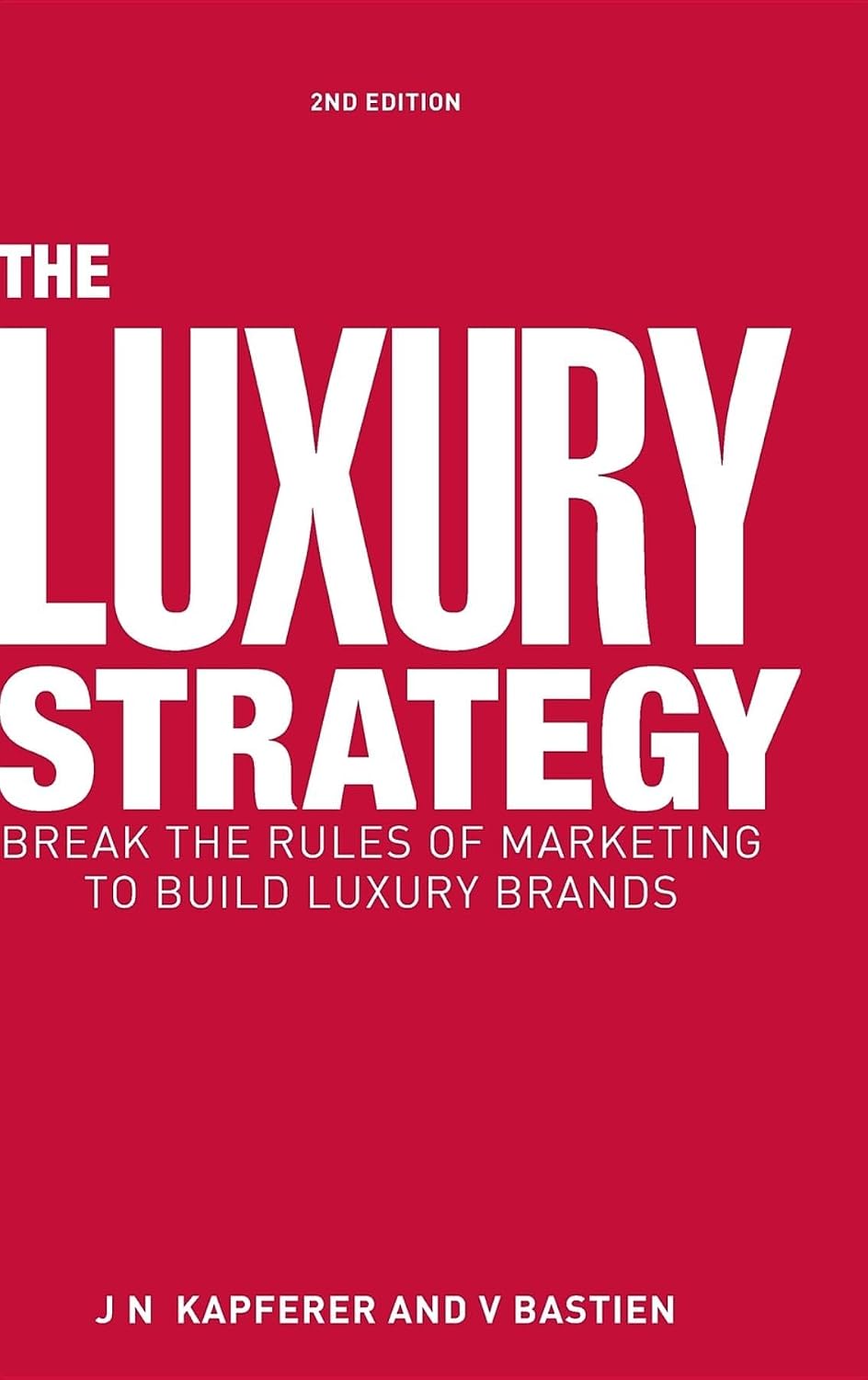

delivered
Get key takeaways from each episode delivered to your inbox.