Brian Armstrong
Brian Armstrong is the co-founder and CEO of Coinbase and NewLimit.
Summary
Brian Armstrong is the co-founder and CEO of Coinbase, the publicly traded cryptocurrency exchange and one of the most recognized names in the digital asset industry.
Armstrong founded Coinbase in 2012 alongside Fred Ehrsam, launching out of Y Combinator with a simple but ambitious goal: to make Bitcoin easy to buy, sell, and store for everyday people. At a time when acquiring cryptocurrency required navigating technically complex and often unreliable platforms, Coinbase offered a clean, accessible interface that brought mainstream users into the space for the first time.
Under Armstrong's leadership, Coinbase grew from a consumer-focused Bitcoin wallet into a sprawling financial infrastructure company serving retail investors, institutional clients, and developers. The company expanded to include a professional trading platform, a self-custody wallet, a layer-2 blockchain called Base, and a suite of developer APIs. In April 2021, Coinbase became the first major cryptocurrency exchange to go public in the United States, listing directly on Nasdaq in a landmark moment for the broader crypto industry.
Armstrong has been one of the most vocal advocates for bringing cryptocurrency into the mainstream, pushing for clear regulatory frameworks that he believes are essential to unlocking the full potential of a crypto-based global economy. He has been equally focused on building a company culture centered entirely on that mission, encouraging employees to leave outside politics at the door and concentrate on the work.
Beyond Coinbase, Armstrong co-founded NewLimit, a longevity biotech company focused on extending human healthspan through epigenetic reprogramming. He writes and speaks regularly about the future of money, decentralized finance, and the long-term potential of a crypto-based global economy — positioning himself not just as a company builder, but as a champion for a more open financial system.
Episode transcript
David Senra: How much of your job is building political power as an advocate for the crypto industry?
Brian Armstrong: Yeah, I mean, I don't have to go, but I think it's worth it for the business. I don't mind going. In some ways, I like doing it. There's some pretty interesting people there. So I go about once a quarter, maybe once or twice a quarter recently, because we're right at the crux of this key moment for market structure legislation. But I'd say over the last few years, yeah, about once a quarter.
David Senra: What's the key moment for the market structure?
Brian Armstrong: Well, the crypto industry has been working for a long time on getting in the Senate. A whole bunch of people have been trying to get this piece of legislation passed in the House. It was called the CLARITY Act. In the Senate, they're drafting their own version of it, but it's essentially clarifying this question about which of these crypto assets are commodities versus securities. And someone might say, "Well, why does it matter?" It matters because, in the United States, we have two different federal regulators, the CFTC and the SEC. The CFTC regulates commodities, the SEC regulates securities.
Brian Armstrong: And so it turns out, in the past, this ambiguity about where crypto assets sit between the two federal regulators, that lack of clarity, was really weaponized by Gary Gensler, the former SEC chair, and Elizabeth Warren, and some people like that who tried to, in my view, unlawfully kill the industry in the United States. So, in other countries where we operate, like in the UK or in Singapore, they only have one federal regulator for financial services, so they actually don't care whether these are commodities or securities.
Brian Armstrong: It's a totally parochial issue in the United States that's kind of like this turf war between two federal agencies in the past. So anyway, we just decided we need to get legislation passed by Congress to clarify, once and for all, which of them go in which bucket so that a future Gary Gensler couldn't come in and try to kill the industry.
David Senra: So, what was the lawfare they were trying to do?
Brian Armstrong: Well, okay, so long story, but essentially this was around the 2020, 2021 timeframe. At Coinbase, we decided we wanted to become a public company. We had been operating for about nine years at that point, and we went in and went through the normal process with the SEC. You have to describe your entire company, how it works, how we decide which assets to list, which do we not list. At that time, we wanted there to be a path to have crypto securities be traded.
Brian Armstrong: Simple way to think of it is a security is a way to raise money for a company that you want to start. A commodity is something that's decentralized, kind of like oil, gold, or copper or something like that, right? So, Bitcoin is decentralized. Nobody controls it. Everyone pretty much agrees Bitcoin is a commodity, but there were people issuing tokens which were raising money for different projects they were doing that were in various stages of decentralization. So, was it a commodity? Was it a security? And then Gary Gensler, the SEC chair at that time, my understanding is that he and Elizabeth Warren essentially decided they wanted to use this to curtail the crypto industry. And if you want to know why...
David Senra: But why?
Brian Armstrong: Well, okay, so Elizabeth Warren is, in my view, she's a socialist. She believes the government should be running all financial services. And she had essentially found a way to bypass Congress and have a lot of influence over financial institutions, big banks. And she did...
David Senra: How would she get that influence?
Brian Armstrong: Well, she would appoint regulators that could essentially go in and pressure the banks to do things that Congress had not necessarily authorized. So under the Constitution, only Congress is allowed to make laws, but the regulator is given some discretion about how they implement those laws. So you can imagine, let's say you're a bank and you have your bank regulator, and they come in.
Brian Armstrong: They can choose to lose your paperwork and not approve something for 90 days, or two years, or five years, or you can have a good relationship with them, and they can approve things. So, let's say, they come in and they start to ask you, "Hey, are you guys serving crypto companies?" And you say, "Well, yes." And they say, "Well, that's not illegal per se, but we're going to have a lot of questions about that in the next exam that we do of your bank. We have deep concerns about the risk that this might introduce."
Brian Armstrong: You know, suddenly everyone inside the bank's getting the message real loud and clear, "Ooh, maybe they don't like us doing this." Now, is it illegal? No. But the bank's regulators, if they say, "Jump," you sometimes want to say, "How high?" Right? And this was the kind of extrajudicial pressure that Elizabeth Warren was able to create on banks. She did it, by the way, in a bunch of other industries, too.
Brian Armstrong: Like, she got them to stop giving loans to the oil and gas and firearms industry and some things that she... It was her own political agenda, basically. So she got kind of her hooks into these banks and had a lot of influence over them. Suddenly, crypto comes along, which is a new system operating outside of that, and she didn't like it too much. And so she asked, my understanding, and this is kind of what other people in the Congress told me, is that she asked Gary Gensler to go hard on crypto and try to really curtail it in the United States. And that's what he did. He created a bunch of lawfare, essentially. Like, we'd go in to meet with him, we did maybe 30 times.
Brian Armstrong: We met with the SEC after becoming a public company, where they allowed us to become a public company, and we'd say, "Hey, we're here. We'll tell you anything you'd like to know. Just tell us what the rules are. We're here to, like... We're trying to build this industry in America. You tell us the rules, and we follow the rules. Like, that's how it's supposed to work.
Brian Armstrong: And they would say, "We're not going to give you any advice. Go talk to your lawyer." And then the next day, an enforcement action would arrive, and we'd say, "Can you show us in the law what you think we've done that's wrong?" They're like, "No, we're not going to do that. Like, you need to comply and basically delist all these assets, or we're going to sue you." And so, at a certain point, we just said, "Okay, let's go to the courts and find out."
David Senra: Who initiated the legal action, them or you?
Brian Armstrong: It was actually both. They created an enforcement action and initiated a lawsuit against us. We actually sued them proactively because they had violated another part of the law called the Administrative Procedures Act, where they're required, actually by law, to engage with the industry to promulgate rules, and they had failed to do that.
David Senra: Wait, how many companies sue their regulator?
Brian Armstrong: Very few. So, this actually gets into one of the big themes of, I don't know, like me as a CEO. I want to try to always do the right thing, and I have a very long-term perspective. I'm trying to create an important outcome here in the world, which is around increasing economic freedom in the world. So, in the short term, I knew this was going to hurt our company. A lot of public market investors just think, "Oh, this company is suing its regulator? Eh, I'll just wait and see. I'm not going to buy that stock," you know? Actually, a lot of people I talked to at that time were like, "Do not sue the SEC. This is a bad idea."
Brian Armstrong: But I did. I actually talked to a couple other financial services CEOs who had sued the SEC and won, so I knew it was possible. You know, it's a little bit like, you remember when SpaceX was trying to get that contract with the government?
David Senra: NASA.
Brian Armstrong: Yeah. And they didn't think it was fair how it was awarded, and they sued, and they won. Like, Palantir had to do something similar. So, you don't want to do these things haphazardly or... But there are moments where you have to stand up and sue the regulator or the government to actually get the right outcome.
David Senra: Okay, so when you're deliberating on whether to do this or not, what's the timeframe? Is this a couple days or a few weeks? Like, how fast do you have to make this decision?
Brian Armstrong: Yeah.
Brian Armstrong: Well, I would say that was probably over a period of three or four months. We could tell the temperature was rising, where they were like, "You're about to get sued." And we were like, "Well, what have we done that's wrong? You haven't published any rules that we can actually adhere to." And we knew the temperature was rising, and then we sued them, and they sued us, and yeah, we made a call.
David Senra: Yeah, the reason I ask is because there's a great story in one of the biographies of Elon when you just mentioned this.
Brian Armstrong: Yeah.
David Senra: And in that case, it's even crazier because you're almost suing your customer because Elon wanted money from NASA.
Brian Armstrong: Yeah. Yeah.
David Senra: And they wind up, there was all kinds of, essentially, corruption, where it's just like I can't remember the amount, it was 250 million or whatever the case was.
Brian Armstrong: Mm-hmm.
David Senra: And they gave it to this other guy's company even though, essentially to save this guy who used to be either a former astronaut or working for NASA, and it's like, "Well, his company will go out of business if we don't give him the money," and Elon's like, "This is insane."
Brian Armstrong: Yeah.
David Senra: "That can't be the way we're making decisions."
Brian Armstrong: Yeah.
Brian Armstrong: Yeah, yeah.
David Senra: And so they tell the story where he's sitting there, and they're like, "What are we going to do, Elon?" He closes his eyes, and he's thinking for a little bit. He's like, "We have to sue them," and they wind up winning.
Brian Armstrong: Founder mode, I guess, you know?
David Senra: Well, you just said "Mission-driven." Like, this is what's very fascinating about you, where it's just like, "Well, I have a mission that I'm on, and so if you're looking at your decisions through that lens, it kind of simplifies what you're doing."
Brian Armstrong: Yeah.
Brian Armstrong: Yeah. And I have a long-term perspective on it, too. Like, if it's going to be short-term pain for a few years while we're going through this, but it allows the industry to actually be built in the United States and help create more economic freedom, which is the mission of the company, then I'm fine with that, you know? I feel like, personally, I'm well off. I'm in this at this point, I don't have to work a day of my life. I'm doing this because I actually want to achieve the outcome at this point. And so, it wouldn't have helped me achieve the outcome if we'd let this regulator unlawfully kill the whole industry in the United States. That would've just been a setback from my point of view.
David Senra: This happened after Republic?
Brian Armstrong: Yeah.
David Senra: So you accumulated resources. Your company has a lot more resources.
Brian Armstrong: Yeah.
David Senra: If this would've occurred before, would you have had the money to fight it?
Brian Armstrong: Probably not. In fact, a lot of startups did die as a result of that law firm. I mean, he didn't just sue us. He sued a whole bunch of crypto companies, and a lot of them folded. So, in many ways, he actually did a lot for the economic development of places like the UAE and the Bahamas and places like that because a lot of the industry moved offshore, but it was incredibly damaging to America. I think the total amount we spent on legal and all that was maybe in the 50 to 100 million range as a result of that law firm.
David Senra: On that one thing?
Brian Armstrong: Yeah. But the damage to the stock was probably, I don't know, 10-20 billion, maybe more. You know, it was a massive downward pressure on the stock for a period of a couple years. Oh, and I should mention, we won that case. So, we didn't pay a single dollar in fines. We didn't have to change a single thing about the company. The judge, or actually, the SEC withdrew it under this new administration, and several judges actually published opinions saying that the SEC behaved in an arbitrary and capricious manner. So I have a nice little thing in my office commemorating winning our case suing the SEC.
David Senra: That's incredible.
David Senra: One of the things I love most about the conversations I have with Brian Armstrong is how focused he is on making the best possible product he can for his customers. "Obsess over customers" is a maxim that is repeated by Jeff Bezos, and you definitely see that with Brian. It also is the same trait that I see in my friend Karim, who's the co-founder and CTO of Ramp. Ramp is the presenting sponsor of this podcast, and Karim is one of the greatest technical minds working in finance today.
David Senra: Karim is obsessed with crafting a high-quality product and using the latest technology to constantly create better experiences for his customers. Ramp has one of the most talented technical teams in finance, and they use rapid, relentless iteration to make their product better every day. In the last year, Ramp has shipped over 300 new features. Ramp is completely committed to using AI to make a better experience for their customers and automate as much of your business's finances as possible.
David Senra: Many of the fastest-growing and most innovative companies in the world are running their businesses on Ramp. Make sure you go to ramp.com to learn how they can help your business save time and money today. Let AI chase your receipts and close your books so you can use your time and energy building great things for your customers. Get started today by going to ramp.com.
David Senra: Where did you get this long-term perspective from?
Brian Armstrong: I think it was from trying a bunch of short-term things and then realizing that... I started some companies in college, and I realized that everything's difficult, right? Even if you're running a sandwich shop or something, it's difficult. You have to find people who... Employees don't show up on time, and the food and the vendors and the margin compression because there's a million other sandwich shops.
Brian Armstrong: And so if you're going to do something, you might as well... It's going to take you a decade or two or three to really start to have an impact. You might as well pick something that you care about, that's the really big thing. You know, it always bothers me a little bit when I talk to entrepreneurs, and they tell me the thing that they're working on, and I'm like, "Okay, what do you really want to do? "Well, my big thing is I really want to do this."
Brian Armstrong: In their mind, it's like a little too ambitious, it's a little too difficult, they need more capital. Part of me is thinking, "Man, you should just go for that now," because it's going to... You could spend the next two decades of your life working on this thing you're just talking about now, and you might as well work on the thing that'll actually have a major impact if it's actually, if it works.
David Senra: So, are you optimizing for impact?
Brian Armstrong: I think so. Yeah. I mean, I think early on in my... I was kind of shy and introverted as a kid, and I was like a little on the autism spectrum and stuff, so I think I was just trying...
David Senra: You keep saying that.
Brian Armstrong: Yeah, I know.
David Senra: We've talked enough. You're not autistic to me.
Brian Armstrong: Well, I mask it well. There's like a whole masking thing.
David Senra: What? Well, let's talk about this.
Brian Armstrong: Yeah.
David Senra: How do you mask your autism? Are you just saying you're autistic because it's like...
Brian Armstrong: Because it’s trendy and cool now? No, it's actually like, that's the good way to get a venture check is like to be on the spectrum. I mean, we're not raising money, but...
David Senra: Introverted for sure, but I'm introverted too.
Brian Armstrong: Yeah.
David Senra: I hate when people in the comments think I'm autistic because I read all the time. Like I'm not autistic, man.
Brian Armstrong: I think I'm somewhere on the spectrum. I've taken some online tests and things like that, and there are things where you'll have difficulty reading people's faces and emotions sometimes. And I kind of can get overstimulated by loud sounds and lights. And so there's kind of classic signs like that.
David Senra: Okay.
Brian Armstrong: But it's not debilitating at all, and I actually find it to be like it's a strength in a sense that I can just endlessly focus on interesting work, almost for 12 hours a day. I just find it to be... I wouldn't say like effortless. It depends on what kind of work I'm doing. If I have to just do a bunch of 12 hours of people management and hard conversations, that's pretty taxing. But if I'm just writing code, reading things on my computer, or just like digesting cool content on the internet, I can just do that endlessly. And I wouldn't say you have to be autistic to have that, but there's certain things like that. I just find it endlessly fascinating.
David Senra: Well, you definitely have the ability to stay with like a non-consensus opinion for a long period of time.
Brian Armstrong: Yes. So that's the other thing, which I don't know if this is an autism spectrum thing, but I think some people are a little more concerned with social cohesion or what other people think. And so there is a part of me that's just like, if I see something that's just wrong and not in line with what I want to accomplish long-term around civilizational progress and these things, I don't care being disliked. I don't really care that much about being disliked for it, and I know that it'll piss people off.
Brian Armstrong: So there are a handful of things like this that I've done in Coinbase, which I think people consistently remark to me like, "Wow, that was really unique." And to me, it didn't seem that unique, but like this mission-first blog post I put out where we said the company's going to be apolitical during 2021, all that madness, or suing your regulator, right? These are things which most people probably wouldn't do because they're afraid of being disliked. And it's not that I like being disliked, it actually causes me a fair amount of stress too, but I don't let that stop me from doing what I think is the right thing.
David Senra: So I recently reread that blog post. Can you remember the context of what you were thinking when you were writing it? Because you look back now, and a lot of people are like, "Of course. You were just focused on the mission of the company. What is the point of having a company if you don't have a mission?"
Brian Armstrong: Yeah.
Brian Armstrong: Yeah.
Brian Armstrong: Right.
David Senra: You read it today, it's like fairly innocuous.
Brian Armstrong: Right.
David Senra: But back then, I remember the response. People were going crazy.
Brian Armstrong: Yeah, it's really funny. If you go look at it now, it's like, "What's the big deal?" I mean, it's kind of a boring blog post in some ways, right? But yeah, at that time, I feel like there was this mass hysteria or something that had like taken over the country. I mean, the George Floyd thing had happened, COVID had happened, so people were isolated. They weren't getting in person as much with folks and feeling a sense of, hey, we're all on the same team. We trust each other.
Brian Armstrong: And increasingly, at these town halls that we would host as a company, usually people would ask questions about our products, our competitors, and regulators, and then we increasingly would be getting these questions about social issues happening in the world. In this case, like police brutality with George Floyd, but all kinds of things, like the Middle East or whatever, gun control.
Brian Armstrong: It became almost like I realized there was this element within the company that really wanted to get in front of the company with a microphone and like see if they could make the executive team squirm somehow. We had this culture of this open mic thing, but I realized that later we actually don't really do that. We just have people pre-submit questions, and if we think... We take hard questions, but if they're like just way off topic or someone's pet issue, we don't entertain that. We don't allow one person to kind of derail 3,000 other people.
Brian Armstrong: So, it was in that context that the company was going through this, and somebody at a town hall asked the question, "Are we going to support Black Lives Matter at Coinbase?" I basically said, "I don't know if I know enough about it, but I'll look into it. Like, move on to the next question." And they kind of held the mic and they said, "That's not good enough. I need to know if we at this company are going to stand for this or not." And I said, "I don't know. I haven't looked into it, right?
Brian Armstrong: And this erupted in Slack, and basically 300 employees did a walkout in protest. If you remember, at this time, like every company in America was posting pro-BLM statements.
David Senra: Mm-hmm.
Brian Armstrong: So, I'd never had a walkout of employees at the company before. I didn't even know what that meant. They all just kind of closed their laptops in a remote environment, I guess.
David Senra: Oh, it's...
Brian Armstrong: Yeah.
David Senra: Okay, so wait, are these... This is not in person?
Brian Armstrong: This was all remote during COVID. Yeah.
David Senra: Okay, so the walkout is close my laptop.
Brian Armstrong: Yeah. But we were like-
David Senra: Go from my bedroom to my living room now.
Brian Armstrong: Yeah, yeah. And I was like, "Okay, this is weird." I mean, as a CEO, I felt like I had the confidence of the company or whatever, and now people are saying they don't refuse to work at this company based on my comment. I found this very confusing, actually, maybe a little of that autism spectrum. I was like, "I'm confused. This company has nothing to do with police brutality or anything. What is going on here?"
Brian Armstrong: And we kind of got in the room as an executive team, and I asked them kind of a few questions, "Hey, people are very sensitive in this moment. They need to feel reassured about where their leaders stand." And I was like, "What does BLM even stand for?" We went and looked into that. Later, I found out, by the way, that they support defunding the police and all these other things. It was not a very simple answer, and so I didn't really know what to do.
Brian Armstrong: So after about 48 hours or so, we put out a statement, and we said, "Okay, I guess we support equality for all people and all these things." And people came back to work. But I felt something was deeply wrong. I felt like I had compromised something about myself, and I didn't understand what was happening. So, I started to go talk to a bunch of employees in the company and read a bunch of these books, like Jonathan Haidt's book and others.
David Senra: Which is the Jonathan Haidt book?
Brian Armstrong: Something of "The American Mind" or "The Coddling of the American Mind," I think.
David Senra: Okay.
Brian Armstrong: Yeah, he basically talks about how on these college campuses, they're training activists on these college campuses, and it's now spilling into the workforce. And they feel that their job is not to join a company and advance its mission, they felt like their job was to join a company and hold truth to power and hold it to account for these broader societal issues, and actually reform the company as an activist. I essentially started drafting this blog post, and I said, "We're not going to do that here."
Brian Armstrong: Like, "We're not going to be a company that just tries to jump into whatever the current hot social issue is and make a bunch of feel-good statements without actually doing anything. We already have an important mission, which is increasing economic freedom, and it takes decades of work to try to make an impact on something that big. So let's stick to the thing that we think is important in the world. And outside of work, people can do whatever they want. You can go protest, you can be left or right, or whatever. But just inside the workplace, we're not going to be political."
Brian Armstrong: We're just going to, unless it has to do with our mission, crypto, and economic freedom, then we'll be very political and engaging for litigation and things like that." So, I knew it was going to piss some people off, and... Actually, some people, when they read the draft post before I sent it, said, "Do not post this." They begged me not to post it.
David Senra: People inside your company, or you sent it to other founders?
Brian Armstrong: Inside the company.
David Senra: Okay.
Brian Armstrong: Yeah.
David Senra: Did you send it to anybody outside Coinbase for the...
Brian Armstrong: I might've sent it to the board or someone like that. I'm not sure if I sent it to anybody out. I think I might've told a few of my friends what I was up to, but they didn't read the post.
David Senra: Okay.
Brian Armstrong: Yeah.
Brian Armstrong: And yeah. So I decided to do it anyway, and I knew people were going to be upset, and so we put out this... We said, "Anybody who's not okay with this new direction..." I had failed to create alignment in the company about where we were going, and I was kind of walking on eggshells around whenever people would ask me this. People were confused about where we stood, and there was maybe, it felt like, 50% of the company was against this, but I think in reality it was like one...
Brian Armstrong: It was a very vocal 1% minority, and there was other people who were sympathetic to that cause. Anyway, we put out the post, and I said, "Anybody who's not aligned with this new direction, we'll give you a good severance package. You can fill out this form and accept it by Friday or something." And 5% of the company took the exit package. We were having bets beforehand, we didn't know. We thought maybe 50% of the company would resign or something. It felt like that was the...
David Senra: What would've happened at that time if 50% resigned?
Brian Armstrong: We would've built it all back. And this is actually a very important point, because I think that there's a big difference between a founder and a presider of a company, right? I know that I could build it back because I started it when it was just me on a laptop, right? And I was there when it was ten people and 100 people and 1,000 people, and if we need to go from 2,000 to 1,000. That's not a big deal to me. I could go back to being on my laptop again if I had to, right? And there's actually...
Brian Armstrong: There's this great Lee Kuan Yew speech that he gave. He's the founder of Singapore, and I guess he was dealing with a strike that was happening, I think from the air traffic controllers or the airline or something like that. But there's this great speech, if you Google "Lee Kuan Yew, iron in the veins." You know which one I'm talking about? He says, in this speech, it kind of gives me chills every time, where he's like, "I sat across the table from them," and they were threatening to shut down the airline and everything. And he said, "Get back to work, and I will not allow you to bring this country down. And if you don't do it, I'm prepared to rebuild it all from scratch again." And he said, "Anyone who rules Singapore has to look at me, and know that I have iron in my veins. Like, I will rebuild it all from scratch," right?
Brian Armstrong: And so I was watching videos like that, and I was like, "This is what I need to do as a leader." It was very inspiring. So there are moments like that you have to stand up and say, "We're going in this direction, and if you're not on board with it, it's okay, you can leave. But we're going this way." That's leadership.
David Senra: There's two interesting things that popped out in what you just said. I want to go long-term. Again, you have this long-term orientation. You mentioned multiple times in the blog post. You're like, "We're trying to change, literally change the world, and that's going to take multiple decades."
Brian Armstrong: Mm-hmm.
David Senra: I want to go to that one second. But I like how you said, "I was confused." Like, what is going on here? So you're not... Your first instinct when you're confused, you start reading books, you start talking to people. What do you do to try to essentially alleviate the confusion? Because you're like, "Oh, I don't know what's going on. I'm going to read Jonathan Haidt's part," for example.
Brian Armstrong: Yeah.
Brian Armstrong: Yeah. All the above. I mean, I read books, and books are amazing. I think sometimes you can take reading like, as you know, it's like read for eight hours to get to that one part. Oh, that's the key insight, you know? So actually calling people, I think, is faster if you have access to them, especially. Earlier in my career, I didn't have access, but now I feel like I can get access to more people, and it's often just a shortcut. Like, if you know the right person to call who's been thinking about that or working on that for ten years, they can explain to you in 30 seconds what you need.
Brian Armstrong: Oh my gosh, that's the connection, of course. So yeah, that's exactly what I do, and I just am following my instinct a lot of the time. A lot of your job as CEO is... Your day can just get infinitely scheduled, and you're just trying to hire the right people and go talk to investors and build and go to product reviews, and stuff. But once in a while, you just need to follow your nose if you're like, "Something's bothering me."
Brian Armstrong: You're kind of always ingesting information, and once in a while you're just like, "Something feels really off over here." This team is rudderless, going in no direction. Or, I don't trust what's going on over here with this policy thing. And you can just go digging, you know. Occasionally you find things, and you can add a lot of value.
David Senra: When you say follow your nose, is this intuition?
Brian Armstrong: Yeah. It's intuition. It's pattern matching. I mean, a lot of times you're just absorbing information, like in documents people are writing up, Slack channels, and reports, and a lot of information's just being ingested. And once in a while, you start to... You're like, "That's the third time I've heard something weird about that. Like, I need to go dig into it."
David Senra: I was actually surprised. One of my favorite conversations I've had so far for the show was with Tobi Lütke.
Brian Armstrong: Yeah.
David Senra: Me and you talked about him at lunch, and I always say he's your favorite founder's favorite founder.
David Senra: Like people that really admire the way he thinks and the way he's building his company. And you would think this German engineer is going to be all data-driven, and he just kept talking about visualization and like affirmations.
Brian Armstrong: Yeah.
Brian Armstrong: Affirmations.
Brian Armstrong: Yeah.
David Senra: Yeah, exactly. All intuition. It was actually surprising. It's one of the most fascinating things about his conversation. So explain the difference you thought about, when you were starting the companies before Coinbase.
David Senra: Because you had this long-term orientation almost from the beginning of Coinbase, but you lacked that in the other businesses that you were starting before that?
Brian Armstrong: Yeah.
Brian Armstrong: It was really just by trying enough projects that either didn't work at all or were base hits that I realized everything was difficult. And I think... So my mentality in college and coming out of college, I knew that I wanted to be an entrepreneur. I was trying different ideas. My view was, "Okay, if I can get something to be paying me," I don't know, 100,000 dollars a year passively, that would be incredible because I could somehow free up all my time, and then I would... I don't know what. I'd be able to be passive income wealthy, and I could then go build something else or I don't know. I didn't really have a plan after that.
David Senra: What year was this?
Brian Armstrong: Oh, graduated in 2005.
David Senra: Were you reading Tim Ferriss?
Brian Armstrong: Yeah. So, Tim Ferriss had a big thing on this, yes. There was the four-hour work week, like that whole thing. I was kind of thinking about it even before that, but the four-hour work week was definitely that. The first company I really started in college was this tutoring company, because I had been tutoring high school kids, while I was in college, to make extra money. And working at the library, you got paid, I forget, it was like 7 or 8 dollars an hour, but if you were tutoring high school kids, you could make 60 dollars an hour.
Brian Armstrong: I was like, "This is crazy." So, I was tutoring kids for a while. And then, I realized I could match my other college students with other high school kids. So, I built this simple web app, which was like a tutor-finding, tutor-matching service called University Tutor, and I was basically building this in college with another friend of mine, a roommate. I didn't think about it from first principles. I wasn't particularly passionate about tutoring or education.
Brian Armstrong: I was just trying to make some passive income essentially and scale it, right? And so, it would've never occurred to me at that moment to... I didn't have the wherewithal to zoom out and say, "You know what? We need to become an interplanetary species. I should make rockets," or, you know? I was like, "What are you talking about?" I'm just trying to go from 60 dollars an hour to have 10 of my friends get jobs too. So, I went through that process. The tutoring company is its own little story.
Brian Armstrong: And then, I tried a couple of other ideas like that after college too. I got these rental houses in Houston, and I was refurbishing them, and I was trying to build a little real estate investment thing. I was doing a bunch of stuff. And at some point I remember I read this book by Seth Godin called "The Dip." I don't know if you've ever seen that book.
David Senra: Yeah, I read it a long time ago.
Brian Armstrong: Yeah. It's actually a pretty simple book. I don't know if it would do anything for me today, but at the time when I read it, it was a pretty powerful idea, and he basically was just saying there's a big dip between being a beginner and at the top of your field where you make the top 1%. And most people quit in the middle, because it's not fun after you're a beginner. There's just like 10,000 hours and all these kind of things.
Brian Armstrong: And I remember thinking, "Do I really want to be doing real estate in 10, 20 years?" I was like, "No." Do I care enough about education? I was like, "I don't think that either." So, I literally had a piece of paper. I was writing, what are the things I am passionate enough about where I would do it for the next 20 years, even if I saw little or no success? And the only thing I could think of was tech entrepreneurship. That was the only thing I could really think of.
Brian Armstrong: And so, that was a very clarifying decision where I decided, all right, I need to move to Silicon Valley, because that's where tech entrepreneurship happens. I need to shut down all the other stuff I'm doing because those are just little short-term games. I sold off all these little rental properties. And within a few years of that decision, moving to Silicon Valley, Coinbase had been founded, and I think within seven years of that decision, Coinbase had a billion-dollar valuation. It was a huge direction and change in my life.
Brian Armstrong: I was just like, "I know the big thing is long-term, and I'm going to just go all in on it," and all the decisions led to that.
David Senra: At the time you started Coinbase, did you think, "If it succeeds, this is something I'm going to dedicate a few decades of my life to doing," even at that point?
Brian Armstrong: I remember I did think that, yeah. Because I tried a couple of these other ideas that were kind of difficult, and I wasn't actually passionate about it. And so, a lot of entrepreneurship, you're just moving from one setback to the next with enthusiasm or whatever. There's that Winston Churchill quote. So, I realized how hard it was to do those businesses, so I was like, "The next thing I try, I need to make sure it's something that I'm really into for a lifetime," right?
Brian Armstrong: And I had been reading a lot of books like Milton Friedman about economics and Ayn Rand stuff, and I was like, "Okay." I was getting kind of into these free market, libertarian ideas, and I was also living in Argentina for a year. That was a whole piece of the story where I got to see a hyperinflation country.
David Senra: Why'd you go to Argentina?
Brian Armstrong: Well, long...
David Senra: Women?
Brian Armstrong: No.
David Senra: Okay.
Brian Armstrong: No. Sadly, no. But I needed some adventure. I didn't know what I wanted to do with my life. I had never traveled alone, and so I basically just went abroad and tried to put myself outside of my comfort zone. I had never been in the military, I'd never traveled abroad by myself. I was kind of just reading a bunch of books and like, "I need to go travel the world and find what I'm trying to do with my life." And...
David Senra: You went to Buenos Aires?
Brian Armstrong: Yeah.
David Senra: It's beautiful.
Brian Armstrong: Yeah.
David Senra: Argentina's a beautiful country.
Brian Armstrong: Yeah. Well, I learned from an economics point of view...
David Senra: Oh, not like that. I meant the physical beauty.
Brian Armstrong: Well, so it ties together, because my understanding is actually around the year 1900 or so, more than 100 years ago, I think in 1908, it was one of the top 10 economies in the whole world.
David Senra: It was called the Paris of South America.
Brian Armstrong: Yeah. It was the first Latin American country that had a train station. You can see it in these historic buildings. They had massive wealth, right? From beef and copper and all these things. And then over a period of 100 years of bad economic policy, of essentially socialist policies of the government stealing wealth from the people, while claiming to help them, it's now the 100th richest economy in the world. It went from top 10 to 100th.
Brian Armstrong: And so, I was down there reading, Ayn Rand, Milton Friedman, and seeing how hyperinflation had decimated this entire country and everyone was pessimistic about the future. And these once grand government buildings were just in these states of decay, with cracks, and ivy, and graffiti on it. And this was around that moment where I was like "Okay, the next thing I do, it needs to be something I'm passionate about for the long term." And within a year or two of that, I had read the Bitcoin whitepaper. That captivated my attention. And then I think...
David Senra: So, Bitcoin whitepaper published end of 2008?
Brian Armstrong: Yeah. And I think I…
David Senra: You read it...
Brian Armstrong: December 2010.
David Senra: Okay.
Brian Armstrong: Yeah, I had just come back from Argentina, so I was in the Bay Area deciding I wanted to be in tech entrepreneurship. I read the Bitcoin whitepaper December 2010. I'd gotten a job at Airbnb, actually, and I was seeing how money movement was happening with them all in these different countries. And that's when I started working on the prototype for Coinbase, nights and weekends.
David Senra: So, wait, how did they move money to all these different countries back then, though?
Brian Armstrong: Legacy payment rails. So, in the U.S. and Europe, it was a little simpler. You could use bank transfers and so they were accepting payments in, then they had to pay out to the host. In many of the countries where they operated, like in Latin America, there would be some local cash pickup service, kind of like a Western Union, but it was different ones in different countries, and they typically had very high fees, like 7% to 12%.
Brian Armstrong: I remember we were trying to send payouts into, I think it was Ecuador or one of these countries, and we were reading that there was a little oligopoly of two companies that do this and that in the region, and we were like, "How much money shows up on the other side? What are your fees?" And we were reading through their documentation, and we're like, "We have no idea how..." It's basically like a borderline corrupt thing. And we basically just decided to send 100 dollars, and we found somebody there, local.
Brian Armstrong: How much money showed up on the other side? Just to give us some rough sense so we could tell the customer how much their payout was going to be. It gave me such a visceral sense of how broken the global financial system is. Each country has its own little proprietary set of oligopolies. And imagine if the internet worked like this, right? It's like, "Oh, I want to load a webpage from another country," and they're like, you pay a high exchange fee, and it comes in a different language. And you have to wait seven days or whatever.
Brian Armstrong: I realized, and due to a couple of these experiences, like the Argentina experience with hyperinflation, the Airbnb experience, and reading some of these books that the world would benefit from a global financial system that was fast, cheap, permissionless, decentralized, so there was no small group of people who could be corrupt or put their fingers on the dials to manipulate it. And so, that was what I was thinking about as I read the Bitcoin whitepaper for the first time.
David Senra: Okay, so you're building your personal philosophy about economics and what's important there.
Brian Armstrong: Mm-hmm
David Senra: You know that you want to dedicate yourself to tech entrepreneurship as far as what your career is, because you're going to be passionate about that, and you want to do something for a long term.
Brian Armstrong: Mm-hmm.
David Senra: And then you're also seeing this real-life problem of trying to send money into all these disparate economies and countries.
Brian Armstrong: Yes.
David Senra: And then you start working on Coinbase nights and weekends?
Brian Armstrong: Yeah.
David Senra: Okay.
Brian Armstrong: Great, great summary, by the way. Yeah, so...
David Senra: I kind of do that for a living.
Brian Armstrong: Yeah, so this is where a little bit of that hustle and drive came in, because I was working long hours at Airbnb. They were like a rocket ship company, I was learning a lot. Really amazing team. But I really wanted to build something new for my next company. I still wanted to be an entrepreneur.
Brian Armstrong: And so, I'd work till like 7:00 p.m. at Airbnb, come home, eat a little dinner, and then from 8:30 to midnight, or something, five days a week, I would work on my startup. And you always have to be very careful. You have to do it on your own separate laptop. Don't do it on company time or company property. Make sure it's separate. But I used my own laptop and sometimes on Sundays I'd work as well, right?
Brian Armstrong: I'd sort of take one day off. But I was just grinding, and I was like, "Okay." I didn't know where to start, so you kind of just have to start with anything, right? So, first I went and talked to a friend of mine who I went to college with. We built this little Android app for Bitcoin, a Bitcoin wallet. I realized once we shipped that, we had done it the wrong way. I tried to recruit him to leave Google and be a cofounder with me. He wasn't ready to do that.
Brian Armstrong: So, I started working on another prototype that was more of a cloud-based Bitcoin wallet, which eventually became Coinbase, and I had to reimplement a whole Bitcoin node in Ruby just to try to get it to hook up to my database, and all these things. So, I was just doing this nights and weekends while occasionally trying to find a cofounder, and going on these cofounder dates.
David Senra: Why did you think you needed a cofounder?
Brian Armstrong: Well, the main reason was that I had read a lot of Paul Graham essays from Y Combinator, and I really wanted to get accepted into Y Combinator. It was the top incubator, it still is, in Silicon Valley. And Paul had these great essays, and one of them had talked about how if you look at Hewlett and Packard and, Larry and Sergey, and there are exceptions, but more often than not, great founders. Building a company is just so difficult, it helps to have people with some complementary skillsets.
Brian Armstrong: So, just to improve my chances of getting into Y Combinator, if nothing else, and the company eventually succeeding, I was trying to find the right person.
David Senra: Yeah, it's interesting because I feel like, even if you have cofounders, there's actually one founder.
Brian Armstrong: Mm-hmm.
David Senra: You could start out with two or three or four, and I know YC is like, "You need a cofounder," and that's something that's repeated. But if you read the history of entrepreneurship, it's like, "You'd start out with three or four or five." There's always one person that's actually driving the company.
Brian Armstrong: Yeah
Brian Armstrong: Well, it's like Wozniak and Jobs, right?
David Senra: Yeah.
Brian Armstrong: Jobs was clearly the one that had more impact over a long period of time, but there probably wouldn't have been an Apple without Woz in the early days.
David Senra: Yeah.
Brian Armstrong: You never know exactly. And I will say, in my case, I tried to find a cofounder for about a year and a half and failed, and so I eventually got the app live and got into Y Combinator, and there's a whole story there.
David Senra: Did you get into Y Combinator as a solo founder?
Brian Armstrong: So, this is another interesting story, but I actually applied with this guy, Ben Reeves, who had created blockchain.info, which is now blockchain.com. He had never heard of Y Combinator, but I convinced him to fly from the UK. We met and had a coffee, and then we went into the interview. Which by the way is a bad idea. You should really cofound with people you've known for a long time. So, anyway, we got accepted, somehow, under that premise.
Brian Armstrong: I don't think we mentioned that we didn't know each other that long or it didn't come up in the interview or something. We didn't hide anything, but, anyway, it became clear within three months that it was not going to work. And so, with the help of YC, I had a hard conversation with him about that, and I went through the program solo.
Brian Armstrong: Anyway, long story short, I went through Y Combinator, raised a seed round at the end of it, and I was lucky enough to have Fred Ehrsam reach out to me, and he became the first person who I really started working with on it, unofficially, and then it just started going really well, very complementary skillsets, and I asked him to cofound. And so, he became the cofounder of Coinbase. And I actually don't think Coinbase would have succeeded without Fred.
Brian Armstrong: If you look at the subsequent three, four, or five years, there was a lot of near-death experiences, and he was just an absolute killer. And so, it was that pairing that allowed us to really get to product market fit and off the launch pad into orbit, if you will.
David Senra: Brad Jacobs has started eight separate billion-dollar companies. He said, "I've come to know a lot of extremely successful people in my life, and they all have one thing in common. They think differently than most people. All of them, to a person, have rearranged their brains to prevail at achieving big goals in turbulent environments where conventional thinking often fails."
David Senra: What Brad noticed is that great business leaders are pattern spotters, but you can't spot patterns if you can't see all of your data. Most businesses only use 20% of their data. Why? Because 80% of customer intelligence is invisible. It's hidden in emails, transcripts, and conversations.
David Senra: That's where HubSpot comes in. With HubSpot, all of your data comes together so you can see the patterns that matter. This is important because when you know more, you grow more, and that is a pattern that never fails. Visit hubspot.com today. That is hubspot.com.
David Senra: There are some funny stories from the early days of Coinbase I've heard. Like, Fred identified that you guys were losing money on every single Bitcoin transaction.
Brian Armstrong: Yeah.
Brian Armstrong: Yes. That is true.
David Senra: How did that happen?
Brian Armstrong: I mean, the simple version of it is that I was a computer science major, and I studied economics and computer science. Fred studied the same thing, but he had gone in to work in finance after college. He went to go work at Goldman Sachs as an FX trader, and I was working as a software engineer/entrepreneur, failing entrepreneur. So, I had more of that engineering brain. He had that finance trader brain.
Brian Armstrong: And so, when he came in and started to analyze all of the flow of funds, on every trade, he was able to map that out and due to certain time risks and these things, he actually was correct, that he mapped that out. And it was just a set of conditions, which I was not as familiar with. So, that was a great example of just him adding value in the first probably three weeks we worked together.
David Senra: But that wasn't a near-death experience?
Brian Armstrong: No, that one wasn't near-death. It was just getting the right business model and fee structure.
David Senra: What was an example of a near-death experience?
Brian Armstrong: Well, okay. So, an example of a near-death experience was, I think we had raised maybe the Series A or something like that. Yeah. And we had found product market fit, so there were a lot of people using the site every day. And we were having this huge backlog of customer support inquiries. Every night from 9.00 p.m. to midnight, we would just try to answer support queries, because we didn't have a customer support team. Well, we were slowly trying to build it, I should say. Anyway, so we had 1,000, 2,000, 5,000, 10,000 backlog of these customer support tickets, and people were getting very angry about all this.
David Senra: Because you couldn't respond?
Brian Armstrong: Yeah.
David Senra: I was one of those people.
Brian Armstrong: Okay. You were early on Coinbase?
David Senra: Yeah.
Brian Armstrong: Okay. Well, apologies for the lack of customer support response.
David Senra: To the point where I was looking up... I had a bunch of Bitcoin on there. There was an issue, and I was like, "What is the address? I'm going to have to fly to San Francisco because these people won't respond to my email."
Brian Armstrong: Yeah. Well, this is exactly what happened, is people started showing up at the office. And we didn't really even have the address published, but there was a photo of the office, and you could see in the background a couple of these buildings. And some people found that, and they started showing up at the office at all of these odd hours. And I remember Fred...
David Senra: Well, back there, they had to be weirdos. The people that were into crypto back then were not your normal people.
Brian Armstrong: I don't know. I mean, once in a while, Fred would actually go answer the door holding a golf club. And usually it was somebody who was like, "Man, why didn't my crypto hit my wallet?" And sometimes we'd write people a physical check and like, "Okay, you need to leave the office." Anyway, that was the first time I'd really experienced having tens of thousands of people angry at you at the same time.
David Senra: Because back then, it was the only place where you could buy Bitcoin with a credit card, right? Like, you could use...
Brian Armstrong: Yeah, or a bank transfer.
David Senra: A bank transfer, right?
Brian Armstrong: Yeah. Once we managed to get that bank partnership set up and an easy way to buy/sell in the U.S., we had instant product market fit, and it was just trying to keep up with the demand.
David Senra: Were you the first crypto company to do that?
Brian Armstrong: In the U.S., yeah.
David Senra: In the U.S., yeah.
Brian Armstrong: Yeah, exactly.
David Senra: How did you get the bank partnership?
Brian Armstrong: So, that's its own whole story. I mean, by the way, there was other near-death experiences around cyber events and things like that we can talk about if you want. But on the bank side...
David Senra: Yeah, I would.
Brian Armstrong: Yeah, so, okay, this is another interesting story where we, believe it or not, the first version of the Coinbase app, actually, you couldn't buy or sell Bitcoin. I thought we were making a wallet for payments on the internet. And so, you could store Bitcoin, you could make Bitcoin payments, and this prototype went out, and I remember a couple hundred people signed up off of Reddit or something like that. But the app was not retaining users, right?
Brian Armstrong: And what they teach you in Y Combinator is go talk to customers, get feedback, and then build the product, and talk to customers, and build the product, and just do that on repeat. And don't get distracted by any other bullshit, like going to conferences or whatever. So, I remember I emailed like three of these people who had signed up, and I was like, "Hey, I built this app. Can I get on the phone with you?" And in the first few conversations, I was like, "I noticed you didn't come back to the app," and the guy was like, "Yeah, I mean, the app was pretty cool, but I just don't have any Bitcoin." And I remember something kind of clicked in my head, and I was like, "Well, if there was a buy button in the app, would you have bought it here?" And I know it sounds ridiculous in hindsight, but at the time, this was market research, right?
Brian Armstrong: And he's like, "Yeah, probably." And so, I was like, "Okay, we've got to make a simple way for people to just buy it here." It's not like you go to a separate exchange and then put it in your wallet for actually daily utility or something. And so then I was like, "Okay, we've got to make it possible to get bank transfers hooked up, kind of like PayPal or debit cards." And I remember calling these different banks and saying, "Hey, I want to get integrated into the bank network, in the ACH." It's called ACH in the U.S. And these banks were either like, "What the heck are you talking about? I've never heard of this thing. It sounds like a scam." Or some of them had heard about Bitcoin, I remember, hung up on me, you know. They were like, "We do not work with Bitcoin companies." Bam. Just slamming the phone down, right?
David Senra: Yeah.
Brian Armstrong: And so I went to the partners at Y Combinator. Actually, one of them was Sam Altman at the time. He was running Y Combinator, and Gary Tan was there. He was helping me, and Paul Buchheit, and these various folks.
Brian Armstrong: And I remember they said, "Well, why don't you go talk to Silicon Valley Bank? Silicon Valley Bank opens bank accounts for lots of Y Combinator companies. We have a good relationship there." So, they warmly introduced me to the right person, and they were like, "These guys are probably crazy, but we like to help Y Combinator, so let's see what we can do." And they ran it through their compliance team, and their compliance team came back and said, "We think you might be what's called a money transmitter, which means you need to have a license in the United States." And I remember getting on the phone with them and they were like, "Well, we can't open this account for you unless you can prove to us that you're not a money transmitter, or you have to get a money transmission license."
Brian Armstrong: And the money transmission license I researched was going to cost 5 or 10 million dollars and take about three or four years, and I'd only raised about 600K right now. So, I was like, "That's not good." But they also said, "Well, if you have some legal argument that you're not a money transmitter, maybe we would allow you to get started." And I remember going to a couple of law firms and one of them agreed. He's like, "There are some arguments that you could make that you're not a money transmitter. It's a little bit of a gray area." And he was like, "I'll write you a legal opinion saying subject to the following terms that you may not be a money transmitter, but it's going to cost 30,000 dollars for this five-page piece of paper." And at the time, I thought this was crazy. We'd raised 600,000 dollars and I was like, "30,000 dollars for a piece of paper?"
Brian Armstrong: But I was talking with my advisors at Y Combinator, and they were like, "Well, if this allows you to get the bank account open and you can start to test your product idea, do it." So, I paid this guy the 30 grand. We got the account open. I wrote all the code myself to do ACH integrations, and you have to FTP these files to the bank, and it's this kind of antiquated system. And it launched, and it had product market fit.
Brian Armstrong: Then it was like, instead of pushing a boulder uphill every day, the boulder was rolling down the hill, and you were just chasing it as fast as you could.
David Senra: So, you could buy Bitcoin through ACH, through a bank transfer?
Brian Armstrong: Yeah.
David Senra: Could you use credit cards back then or no?
Brian Armstrong: No. I think debit card came a year or two after that. Yeah.
David Senra: Okay, so even that, with just the bank transfer.
Brian Armstrong: Yeah.
David Senra: Flooded with customers.
Brian Armstrong: Yeah, and started to get some very anxious calls from the bank at certain points, too, because, they were like, "You guys have raised 600,000 dollars," and they were like, "Every day there's 550,000 dollars," because we'd debit these customer accounts to get the money, but we had to pre-buy the Bitcoin, and so we had this cash flow issue where we were basically using our entire balance every day just to service the current demand.
Brian Armstrong: I remember the guy from the bank called me kind of frantic, and he's like, "If you just have one error, you're insolvent." And by the way, they might be on the hook for it, too. We might be at negative a million dollars and just be insolvent, and then the bank's on the hook for it. And I remember the guy told me on the phone, he's like, "You need to go raise money right now and get more money in your account or we're not going to be able to continue to serve you on this ACH network transfers." You were in this tiny little sandbox, but now you're suddenly growing like a weed.
Brian Armstrong: And I remember we took this graph of the daily buys. We didn't even have a pitch deck or anything, and we just went out and in a week raised the next round and got like 25 million dollars deposited in the account.
David Senra: With a graph.
Brian Armstrong: Yeah, because ordinarily, I wouldn't recommend that, but we were sleep-deprived, and that's all we had time to do, so we just went and we showed them a few pieces of data, and we were like, "This is an up-and-to-the-right graph of demand, and the bank's going to close our account in two weeks if we don't get that money."
David Senra: That 25 million was from a16z and Ribbit?
Brian Armstrong: The Series A was from Union Square Ventures and Ribbit.
David Senra: Okay.
Brian Armstrong: Yeah, and then a16z was the B series.
David Senra: Okay.
Brian Armstrong: Yeah.
David Senra: So, who was doing the graph then? Was it Union Square and Ribbit on the graph?
Brian Armstrong: That was... Yeah.
David Senra: Okay.
Brian Armstrong: Union Square Ventures and Ribbit.
David Senra: Was it Micky?
Brian Armstrong: Yeah. You know him? Okay.
David Senra: Yeah, I spent some time with him. I like him a lot.
Brian Armstrong: He's great. Yep.
David Senra: That sounds like something he would do.
Brian Armstrong: Yeah. Well, he was a Bitcoin believer for a long time before that.
David Senra: Why? Because he came... He spent the first 36 or 37 years of his life living in South America.
Brian Armstrong: Yep, Venezuela.
David Senra: Yeah, exactly.
Brian Armstrong: The people who had seen hyperinflation countries kind of got it right away. The people who had only spent time in the United States were like, "Why would anyone use a new kind of money?"
David Senra: So, from your perspective as a founder, you thought your product at that point was a wallet and an exchange to buy Bitcoin.
Brian Armstrong: Yeah.
David Senra: And how long did you think that was going to be the totality of the business? Were you already thinking about product extension back then or no?
Brian Armstrong: First, I knew there was a lot of ways to die along the way, so I was just trying to get the simple thing working. I mean, we had hackers trying to break into our systems. We had engineers quitting because it was just overwhelming, and there was too much stuff. They were getting paged in the middle of the night, like three times every night trying to keep the website up. These banks might just turn us off, so I was just trying to survive the next few months often.
Brian Armstrong: In the back of my mind, I knew that if we could get this thing to scale just on the first product, there's all kinds of things that this could disrupt. I mean, that's what I got excited about when I first read the Bitcoin whitepaper, was like this could be a new kind of financial system for the world, that's global and fair, decentralized, more free market-oriented. Anybody with a cellphone could have access to good financial services, participate in a global economy. The government couldn't erode all of their wealth via inflation like what happened in Argentina.
Brian Armstrong: So, I knew that there was high potential for this eventually, but there wasn't too much time to think about that. There was a lot of sleep deprivation and long hours and just trying to survive to the next three months.
David Senra: And how long did that period last? Is this a couple of years?
Brian Armstrong: Yeah. I mean, I'd say, like four or five years in, we were at a place where I felt like I could take a week off and the place wouldn't blow up or something. Yeah.
David Senra: Who's influencing your thinking in terms of the kind of company that you want to build and the way you want to build it back then?
Brian Armstrong: There was a book called "PayPal Wars," which talked about the early days of PayPal, and it's actually pretty remarkable. You go back and look at what Peter Thiel and Elon, Max Levchin, all these guys were doing, David Sacks. They actually had many similar ideas to Bitcoin. They were trying to create a decentralized form of money that could be permissionless global on the Internet. Because of the history of the company and how it got acquired by eBay, and a lot of the people left, it ended up being more just like a checkout alternative with credit cards and stuff.
Brian Armstrong: But actually, having worked at Airbnb, that actually gave me a good picture into what was possible as well, because in college I went to school at Rice University in Houston. Amazing school. I loved it. But it didn't really have a startup environment. It wasn't like Stanford or something. And so, I had never really seen a successful startup from the inside. I had tried doing my own startup, which didn't go super well. And inside Airbnb, it was like some magic was happening.
Brian Armstrong: Like, they'd caught lightning in a bottle, and the thing was growing like wildfire. The way that they hired people and had this really high bar for excellence and design, the way they did decision-making, a lot of things I got to see working there. And then I kind of said, "Okay..." Before, in my mind, I had it kind of put on a pedestal. I was like, "Wow, these are some crazy geniuses that are doing all this kind of stuff." And there's something amazing about getting in the room just so you can see how people work, and it doesn't mean that they're not geniuses. I think those guys are brilliant.
Brian Armstrong: It means I got to see it and it demystified it, and it made it feel possible that I could try to do something a little bit similar, right? And so there's a couple companies like that. I mean, nowadays I would say certainly the level of ambition like that Elon has and these things are very inspiring. I've tried to take bits and parts from Google, Amazon. I've sort of been a student of lots of these companies and tried to take the best.
David Senra: Anything from history?
Brian Armstrong: Yeah. I mean, I really like the Wright brothers. They're cool. Have you ever done an episode on them?
David Senra: Yeah, episode 228.
Brian Armstrong: You remember that? Wow.
David Senra: Yeah.
Brian Armstrong: Okay.
David Senra: The book by David McCullough.
Brian Armstrong: Yeah. I think that's the one I read, too.
David Senra: It's an incredible biography.
Brian Armstrong: Incredible. Yeah. I love these big problems like that humanity... You know that it's kind of crazy, but it's possible, and someone's going to do it, maybe in the next 100 years. And there's a few things like that. Like, longevity, we can talk about that in the biotech space, fusion energy, strong AI.
David Senra: The Wright brothers is crazy because that was like a centuries-old problem.
Brian Armstrong: Yeah.
David Senra: Like, humans have been trying to figure out how to fly for centuries before these two brothers in Dayton, Ohio, if I remember correctly, that essentially solved centuries-old problem with the modest profits of a bicycle shop.
Brian Armstrong: Yeah.
Brian Armstrong: Yeah.
David Senra: And what was fascinating about them is most of the... I mean, they had a ton of competitors that had more credentials, more financial backing, and I think in David McCullough's book, if I remember correctly, they solved human-powered flight with 1,500 dollars.
Brian Armstrong: Yeah. It was some really tiny amount of money. And there was people funded with 200 or X as much money.
David Senra: Yeah.
Brian Armstrong: But yeah, I get very passionate about going after what are the big ideas like that, that people could go after. And I think it's actually worth everybody writing some of those down periodically and then see which one grabs you, and you think you have something unique to contribute, and just go for it. Those are the big, exciting ideas.
David Senra: So going back to where we were in the story, you're like, "Okay, I just need to not die."
Brian Armstrong: Yeah.
David Senra: "I have something working and as if I just don't die I can figure out other products or a way to grow the business in the future."
Brian Armstrong: Yeah.
David Senra: Were you thinking of any other specific way about, I want to build a company this way.
Brian Armstrong: Mm-hmm. Well, there was a few things I was thinking about. I mean, one was articulating a mission that could be bigger, writing down the values of the company, which we can talk about. Actually, we didn't do this, maybe till we were a couple hundred people, because this all happened organically in the beginning. It was just who we were hiring, and the culture sort of formed organically. But after we got a little bigger, we started to think about, let's formalize it. I wasn't going to be able to be in every single interview indefinitely, right? So, okay, the values, the mission.
David Senra: When did you arrive at the mission?
Brian Armstrong: I don't remember the exact year, but it was at least a few years in, we started to really think about it. And for me, it was not just getting people to use crypto or something. It's like, why do we want that? And it was because it was enabling everybody to own their own wealth in a way that couldn't be taken from them, go try to attempt more ambitious things in life. It was kind of like a foundation, basic property rights, is what they'd call it in economics, right?
Brian Armstrong: And if you had sound money, basic property rights, low friction to try new things in the world that might benefit people, and actually be able to keep the upside of it, you'd have more people trying, attempting this. That very much appealed to me. We sort of take this for granted in the United States, that usually the money's just not going to get taken out of your bank account or something like that. But in many places of the world, that's not true, right?
Brian Armstrong: There are places where the government will actually do seizures. Cyprus actually did this recently, in the past, where they just took a bunch of money out of everyone's bank accounts to cover debt. There's refugees that have to flee borders in various times in history, where all their wealth gets confiscated. There is so much bureaucracy and corruption in places like Argentina to even start a company. It's a huge black market, and there's just... Yeah.
Brian Armstrong: And by the way, people they can't get access to loans or anything like that. One of the major ways people build wealth in the United States is you buy a home and you get a mortgage. Only wealthy people can really buy real estate in Argentina because you can't get a mortgage, and you have to pay cash. So, there's all kinds of ways that this is just pernicious and decelerates progress, essentially. So, I was trying to think of a pithy way to articulate that, and I wrote down this increased economic freedom in the world mission.
Brian Armstrong: And it's a little wonky. Sometimes people don't know what exactly it means, and they have to go read about it. But it does encompass what we're trying to do, and I think crypto is the best technology to increase economic freedom.
David Senra: How were you recruiting talent back then? And were you sitting in on every single interview?
Brian Armstrong: Yeah. I mean, the very early days, it was just like me going to meetups and trying to get anybody interested and come and interview. It was cold messaging people off LinkedIn. It was reaching out to people who I had worked with in various contexts.
David Senra: Why did it have to be outbound at that point?
Brian Armstrong: Well, first of all, crypto was a very niche thing. We were not a hot company at Y Combinator. We went to the demo day that they do, where we raised the 600K seed round and... But there was lots of companies that raised like multi-million dollar rounds and beyond. We were kind of middle of the pack somewhere, maybe a little below in terms of how hot the company was. So, the only people we managed to actually convince to invest or to join the company were people who had already gotten excited about crypto for some reason.
Brian Armstrong: And then they met us, and they're like, "Okay, this is semi-legit, at least. Like, they've gone through Y Combinator, they have this product that's working, they've had some early investors like Union Square Ventures." And so we got some of these... The first five or 10 people who joined were crypto zealots who just thought we might be a good company to bet on. As the company got bigger, we hired recruiting teams and the whole thing.
Brian Armstrong: We were competing with big tech in San Francisco, which was during the zero-interest-rate phenomenon. It was fiercely competitive. We eventually broadened out, opened other offices, hired some remote workers. Hiring is its own whole topic.
David Senra: Yeah. Well, I'm curious, have you found any other...
Brian Armstrong: Yeah.
David Senra: I talked to my friend Karim, founder of Ramp, about this.
David Senra: Daniel Ek, founder of Spotify. They both think about it in the same exact way, where they hire for spikes.
Brian Armstrong: Mm-hmm.
Brian Armstrong: Yeah.
David Senra: One of the benefits of being a founder-led company is big companies try to manage the middle. They don't want the high highs or the low lows. And Daniel and Karim are both like, "No, I want the person that is the best in the world at this one tiny little thing, and that's all I want them to do. And I'll deal with their usually excessive or extreme personality traits on the other side of that."
Brian Armstrong: Yeah.
Brian Armstrong: Yeah, I totally agree with that. We were looking at people's past work, and not necessarily like their resume, or you know.
David Senra: Mm-hmm.
Brian Armstrong: If they showed up in the interview and it was like, "Wow, I learned something. I left the interview with more energy than I went in. They're very efficient communicator," and then they can point to things that they've done, which are real outliers of success. We're like, "Oh, that's awesome." Or maybe we've seen their work previously. These are people who we would hire. I mean, there's many examples of this.
Brian Armstrong: Like, you talk about some of their personality quirks, and like Balaji's friend in Boston is this genius guy who was our CTO for a while, and he did so many amazing things, and he's very eccentric. Actually, the very first hire at Coinbase was this guy, Olaf Carlson-Wee, outside of Fred and I as the co-founders. And we were trying to hire someone to come in and run customer support because of the backlog I mentioned. And I remember it came down, there were two finalists. One of them was this guy who had run a team at Google AdSense.
Brian Armstrong: And on paper, he was this guy who worked at Google. He'd run a big team of 20 or 30 people. I was very credentialed. But in the interview, it was just like, it was low energy and not exciting for some reason, even though on paper, he was super qualified. And Olaf came in, and his prior job was he was a lumberjack. Literally. He had just graduated college.
Brian Armstrong: He wrote his thesis in college on Bitcoin, and then he did this walkabout sort of spirit quest thing where he went for summer, and it was he was a lumberjack. So he came in, and he looked super disheveled, and he threw on some ill-fitting suit he'd bought on the way to the interview or so, because he only owned lumberjack clothing. But the guy was just super bright, super passionate, super young, super-hungry. And we're like, "Screw it. Let's just give this guy a shot."
Brian Armstrong: It was just exciting to talk to him about crypto, and he crushed it. By the way, he went on and founded like a... He's a billionaire. He's created a crypto venture fund. So, these were the kinds of bets that we wanted to make. They were people who were entrepreneurial. We've had a lot of good success with that. I know Tobi talked about that recently on the podcast, too. And they were people that were just high agency, smart, get shit done, even if they were totally unqualified on paper, and those were some of our best hires.
David Senra: So, I was reading a ton of the Bitcoin subreddit back then.
Brian Armstrong: Yeah.
David Senra: Around this time. And am I wrong? Weren't you getting a lot of shit because everybody's like, "This is decentralized," and you're like, "Well, no, I'm actually trying to build like a real business here, like..."
Brian Armstrong: Yeah.
David Senra: Did you have an issue getting talented people to work for you? Because you were kind of... This is it, you might be autistic, you might be right, because now you're interested in this weird Bitcoin thing way before other people are. And then not only that, you're bucking the trend in this weird subculture, too.
Brian Armstrong: Yeah. I mean, so people did often ask that. They're like, "Well, isn't the whole point of Bitcoin to be decentralized?" And I was like, "Yeah, it uses a decentralized protocol. We just want to make it easy for people to access it, so you can choose to use our company, but you could use it at any company." As opposed to, let's say, Visa. The only way to access the Visa network is through one company, Visa. But email is a better analogy. Email is a decentralized protocol, but you can use Gmail, Outlook, or whatever. So, at least there's like choice.
Brian Armstrong: But even going beyond that, because for years we heard that as a criticism, so we said, "All right, let's make a self-custodial wallet, too. Like, if you want to custody your own crypto and not have to trust us at all, we're going to put out a wallet for that." And so, we have a successful product now, too, on our self-custodial wallet. I think both are important. The centralized product gives people a lot of ease of use. Like, if you forget your password, your money's not gone, that kind of stuff. And it also allowed a lot of big institutions...
Brian Armstrong: Like, most of the money in the world is at something like 80% or 90% of it's all tied up in financial institutions. It's not retail people. And so, when we met with institutions, we're like, "Self-custodial wallets," they're like, "That sounds super scary. We're not going to do that." So, they wanted these kinds of enterprise-grade custody solutions. And we've been very successful building those kinds of things for banks.
David Senra: That decision was based on the response from the market, or is that a decision you made before and then brought that decision to the market?
Brian Armstrong: The one around institutions specifically was based on conversations with them, yeah. And the retail customer, though, I would say that was made prior to customer. That was my intuition. So, we've got to make this simple, and easy to use, and trusted. And the average person is not going to know how to run a self-custodial wallet on their laptop. The tech has gotten better and better, where account recovery and these things are now possible, but at the time, it was very scary. Many people had this happen, sadly. Like, if they lost their password or something, trying to custody their own Bitcoin, it was gone. There's many sad stories about that.
David Senra: Yeah, it's funny because there's a parallel here. When Steve Jobs had that observation, he's like, "Well, the first things we're making at Apple, they're for hobbyists." But he's like, "If the amount of people that want to put together their own computer, as opposed to the ones that want to go to the store." If you just treat it... He called it the appliance. He's wanted to make a personal computer as appliance. He's like, "That market is a thousand times bigger."
Brian Armstrong: Mm-hmm.
Brian Armstrong: Yeah.
David Senra: Wound up being millions of times bigger, actually.
Brian Armstrong: Yeah.
David Senra: But his idea was, the easier I make it, the bigger the market gets.
Brian Armstrong: I think that's right. And it's fine. A lot of these products start off with hobbyists who love the tech for the tech's sake, and they want to take it apart. But ultimately, what crypto's going to do is just going to update the financial system so people have better financial services. Many people are going to use it without even knowing they're using crypto. They're just going to say, "I don't know, I just want to send money to my family abroad or whatever, and instead of paying 11% at Western Union, I just want it to arrive instantly for free or whatever." And they're going to use stablecoins for that, right?
Brian Armstrong: Or if they want to get a loan and it's just using DeFi, it's cheaper, lower rate, and they can get approved in 30 seconds. It's like, that's easier than calling a bank and filling out all these forms, right? So, Coinbase's app actually has evolved. I mean, fast-forwarding to modern day, you can trade any type of asset, not just crypto assets. You can trade stocks, commodities, and prediction markets. And then you can get a loan, you have a Coinbase card, you can spend. We're just trying to build better financial services now, and actually, that's where you start to get into multi-trillion dollar market.
David Senra: Yeah, you call it the what, the everything app?
Brian Armstrong: The everything exchange, yeah.
David Senra: The everything exchange.
Brian Armstrong: Yeah.
David Senra: Yeah.
Brian Armstrong: And a super app, maybe you combine the two.
David Senra: Okay. This is not a plan from the beginning. Like, Bezos had the everything store. That was the code name of Amazon in D. E. Shaw, like in the hedge fund that spun out.
Brian Armstrong: Yeah.
David Senra: So, he kind of had that master plan at the beginning, even though he started with books.
Brian Armstrong: Yeah.
David Senra: But that was not the case with Coinbase, correct?
Brian Armstrong: I felt like more and more of the economy was going to run on Bitcoin because it was just faster, cheaper, more global. I couldn't have foreseen all of the things that happened. I didn't foresee stablecoins, I didn't foresee prediction markets. I just knew that we had a foothold with something everybody really... Bitcoin turned out to be the best performing asset class of the last decade, and so a lot of people wanted to buy it and hold it, and we were the easiest way to do that. That was a wedge into the market to start to then update all kinds of financial services.
David Senra: And that's how you thought about it.
Brian Armstrong: I didn't have a complete picture of that from day one. I think that would be intellectually dishonest for me to say that I knew exactly how that was going to play out, but I had a... I knew that the potential of it went way beyond just buying Bitcoin or something. I was like, this could power the global economy because it's just better than having certain countries printing their own money or super high fees in each country. We need a native financial layer to the internet that's truly global and decentralized, and a bigger and bigger share of GDP could run on that over time. I knew it was massive, I just didn't know exactly how it'd play out.
David Senra: Hey, real quick, I've started a newsletter for this podcast that you might find interesting. The newsletter shares five of my favorite quotes from each episode, along with behind-the-scenes photos with the guest. The first of these newsletters goes out next week. I'll share my five favorite quotes from the Daniel Ek episode, along with some of the photos with Daniel and I. To sign up, just go to davidsenra.com/newsletter. That's davidsenra.com/newsletter.
David Senra: So, how do you think about running the company now? How is it organized?
Brian Armstrong: Well, there's lots of ways you can answer that question. So, I have a really amazing president and COO, Emilie Choi. She really is an amazing operator, allows me to focus on managing a lot of the product groups. I'd say I'm a pretty product-focused CEO. She's operationally focused, and it's an amazing combo of skill sets. I actually think that a lot of enterprise value can get generated when you pair a technical founder with a great operator, right?
Brian Armstrong: Because if you have just an operator, they can make the company very, very efficient. You know, this sort of stereotypically, everyone's different, right? But if you imagine only an operational leader, the company will run very efficiently, but they'll miss their next wave of innovation or something, right? And if you have only a founder, sometimes they blow the place up, because they're always trying to do some crazy new thing, right?
Brian Armstrong: And so, I think there's a really healthy balance of those two things, and there are other companies where traditionally Zuckerberg and Sheryl Sandberg, or whatever kind of classic thing you want to look at. I'd say even at Google, there probably Eric Schmidt and Larry kind of played that role, right, and with Sergey. So there's examples like that in history, I think... Anyway, it's generated a lot of value for Coinbase to have Emilie and I both there.
David Senra: And you get the most energy when you're working on product?
Brian Armstrong: Yeah. And I don't mind going and doing some policy. Try to get legislation passed and...
David Senra: You don't mind it?
Brian Armstrong: Yeah. There was times where I felt, man, it's draining to go to DC, and I have to go meet with all these politicians. I actually don't mind it now in a weird way. There are so many interesting people in DC. There's big, big personalities and...
David Senra: Okay, hold on. We got to go into that because you said that earlier, and I was like, I got to ask him about this.
Brian Armstrong: Yeah, yeah.
David Senra: That is shocking to me.
Brian Armstrong: Yeah.
David Senra: That you find them interesting.
Brian Armstrong: Well, here's one thing I learned about my motivation is that, I can get excited about anything that helps advance the mission of the company forward, right? There is times where if you look at what I'm actually doing, it's really not fun, like grind stuff. It's just like, oh, review 300 resumes or something.
Brian Armstrong: Or there was a moment where we didn't have the right finance leader, and I was going to all these meetings with accountants and stuff, and I was like, I took a class in college on accounting, but I'm not an accountant by any stretch of the imagination. And I was like, if this is what is necessary at this moment to get the financial statements to a state where we can close this round or whatever, it's generating value in the company. So, I try to derive my sense of motivation from that. And a lot of times, the thing I'm doing is actually the gnarliest problem in the company.
Brian Armstrong: It's like, oh, these two teams are super pissed at each other, and both the leaders are threatening to quit and... Or I have to go shut down this whole thing, and we're going to lay people off or whatever. Usually, it's the worst thing you're trying just like, you don't want to wake up and do. But I find a sense of, I'm not a masochist about it. Like a lot of times, it's draining, but I derive a sense of fulfillment from it of like, okay, this is moving the ball forward. At least I did something useful today.
David Senra: I like that idea of you're essentially searching for bottlenecks in the company.
Brian Armstrong: Yeah, like that's a great... Actually, Elon frames it, what is the limiting factor at any given time? And I go dive deep on that. That is a very great principle. I'd say the last thing is just if we try to push down decision-making in the org, right? It's hard to do, but that's like, make clear DRIs of each of these different things, and just try to amp up the pace of execution, right, of just...
Brian Armstrong: It's hard to do as the company gets bigger because you have more stakeholders and all this, but it's like a single decision-maker, push it down, and just give people short time frames to like knock out a decision, unblock this, go, go, go. And I try to be a little bit of the pace car for that and provide risk tolerance to the organization when needed.
Brian Armstrong: Let's say somebody comes and says, "Hey, I think we should try this thing, and it's a kind of a crazy idea, but if it worked, it'd be amazing." It'd be like a 20X outcome, but it has a 20% percent chance of success, which you should take that bet all day long. But most companies are risk-averse. They won't do something that has a 20% chance of success. And I'm like, "Go for it. If it fails, it's on me." And I try to just give people air cover for those things. So, that's a little bit of the decision-making as to how we do that.
David Senra: What other elements of the company do you think are a reflection of your personality as the founder?
Brian Armstrong: I mean, just the fact that we have four or five product groups, that's probably a little bit of the reflection of my... I always want to build new things, almost to a fault, and actually, we have a lot of good systems in place to be rigorous about, okay, let's... Resource allocation is very important, and you don't want to get too spread too thin. But I keep having ambition to go build new things and new categories.
David Senra: In the age of AI, that actually might be more valuable.
Brian Armstrong: How so? What do you think? Because lower cost to try it?
David Senra: Because if you have unlimited agents. Yeah, if you have all these ideas, and usually you'd be constrained by time or resources or actual physical people to go and implement all these ideas coming out of your head.
Brian Armstrong: Yeah.
David Senra: And now you have on tap, on-demand intelligent coworkers.
Brian Armstrong: Yeah. That's true. The cost to get a V1 running is now much, much lower.
David Senra: Yeah.
Brian Armstrong: And we are seeing that internally. Now, to see something through is still intense amounts of work. But yeah, we think a lot about resource allocation, where you can have like a two or three-person team just try these ideas internally, and then, only if it starts to work and hits key milestones, then do you do the series A internally. So, we try to treat it a little bit like venture capital. And the hard part is...
David Senra: Is this the language you use inside the company?
Brian Armstrong: Yeah.
David Senra: Really?
Brian Armstrong: Yeah. One of the key things we did actually was that twice a year, any employees can come pitch and say, "Hey, I think we should be doing this, and I have the team to go do it." And in most companies, you have to get your boss to say yes, your boss's boss, your boss's boss, all the way up to the CEO. So, you have to get five yeses in a row, which is basically a committee, and if one person says no, it won't happen, which means the company's risk-averse. What we've tried to set up internally is we call these next bets, but you can come in and pitch. So, each of the product group leaders has their own budget.
Brian Armstrong: I'm there, CFO's there, Emilie, maybe one or two really talented young engineers, and if you get any one of us to say yes and fund it out of your budget, you're greenlit. So, it's kind of coming in and pitching at 10 venture capitalists.
David Senra: So you almost inverted it?
Brian Armstrong: Yeah. So you only need to get one yes if someone wants to fund it out of their budget, which is... Yeah. And there's actually been examples where I voted no on something, and it turned out to be a massive success. And an example of that is USDC, which is the stable coin. I am actually embarrassed to admit I voted no on that idea. Luckily, somebody else funded it out of their budget, and I think, in 2025, we did like 800 million revenue off it or something. So, it tells you that sometimes good ideas can come from anywhere. It's like, actually reading about Steve Jobs and Wozniak, that Wozniak, whatever, he went to his employer, HP, and told him, "Hey, I think we should make a personal computer."
David Senra: Yeah.
Brian Armstrong: They said no, and then he left to found Apple. So...
David Senra: Many such cases.
Brian Armstrong: Yeah. I always have a little bit...
David Senra: Sam Walton tried to give away the idea for Walmart. They said no.
Brian Armstrong: Yeah. So, I always have a little bit of that fear in the back of my mind of like, there's brilliant young engineers inside Coinbase, I want to make sure they can come and pitch, and somebody, even if it's not me, funds it.
David Senra: How much time do you spend on Coinbase marketing?
David Senra: Are you interested in it at all? You guys are doing very unique things around marketing.
Brian Armstrong: Yeah. Thanks for noticing that. I mean, I wish I could take more credit for that. I actually think it's the team entirely. They come and show me the things they're doing, and the only thing I'm doing is I'm trying to give them air cover to try crazy stuff. And basically, whenever they show me something, like that's awesome. Run with it. And whereas I think some organizations would be a little too cautious or hesitant. But yeah, what they're doing with putting QR codes in the Super Bowl, or they just did this karaoke thing at the Super Bowl, or I don't know, they're trying more ambitious ideas, which I like. A lot of marketing now is... It's actually more like content on the internet than your typical brand ad running on TV.
Brian Armstrong: And just a very simple thing, actually, was I remember we were putting our earnings calls. As a public company, you put out your earnings. They're usually kind of dry and boring. Like, these analysts tune in, listen to these calls. You're on a conference call. It was using this really ancient technology and this ancient vendor that we were using. And I remember I was always so bored on these earnings calls. I was like, "Man, how do we spice these things up? Just do something more interesting?" And I remember some of the people on the finance team were like, "Brian," just like, "Stay on script. It's supposed to be boring." Like, "Just report the numbers. That's all we're doing here."
David Senra: Yeah.
Brian Armstrong: And I was like, "No! Like, this is a marketing moment. We're supposed to be selling some stock, right? Let's go out and tell the story of the company." So anyway, just in this recent earnings, we put together a pitch deck, kind of like we were going and pitching when we were a private company. And I was like, I want to just run through the deck and make a video of me. And then, we put it on the website, and one of the guys on our marketing team paired it... Have you seen those videos, vertical video, where the guy...
David Senra: I saw this.
Brian Armstrong: Yeah. Like, the guy's running through the game collecting coins. And...
David Senra: So they realized on short form that you can have somebody speaking, but then if you put somebody playing a video game or whatever the case is, or going through a maze, the retention goes through the roof.
Brian Armstrong: Yeah.
Brian Armstrong: Yeah.
Brian Armstrong: Yeah. And so, we have these young internet native marketing people. They're not like the people who made ads for Coca-Cola or something.
David Senra: Yeah.
Brian Armstrong: They're just people who've lived their whole life on the internet and meme culture, and all this kind of stuff, right? And I mean, somebody could reasonably say, "Well, Brian, are you trying to turn the company into a meme stock or something?" And I'm like, "No, not really." I think we're building something very serious and important as an institution that's going to stand the test of time. But we do need to get the word out in the way that people actually consume content today. And frankly, I think our shareholder letter is brilliant.
Brian Armstrong: I get a lot of good feedback on it from the biggest funds at Fidelity and all these kind of folks. So, I'm glad we're putting out a shareholder letter. But 99% of people aren't going to read our shareholder letter. They're going to see some clip on social media about the company, and that's how they're ingesting their information. So, how do we speak in an Internet-native way? And that is marketing.
David Senra: Everything is marketing.
Brian Armstrong: Yeah. I mean, everything's content.
David Senra: I like that you had this, "I have to do the calls anyways."
Brian Armstrong: Yeah.
David Senra: Like, why don't you actually make them interesting? You said you have to get attention. People have to pay attention to what we're doing, or they're not going to... It kind of serves the mission, too. There's a great maxim from David Ogilvy about this. He says, "You can't save souls in an empty church."
Brian Armstrong: Yeah.
David Senra: It's like, if you want to save their soul, you got to get their attention first. You've got to get them in the door first.
Brian Armstrong: Yeah. Well said.
David Senra: How do you compose your shareholder letters? Because I'm going through this right now. I just reread Warren Buffett's shareholder letters since the last one is out. But that was the best marketing that he ever did.
Brian Armstrong: Mm.
Brian Armstrong: Mm-hmm.
Brian Armstrong: Mm-hmm.
David Senra: Every year, each year took them about seven months of him, and I think her name's Carol Loomis, going back and forth.
Brian Armstrong: Mm.
David Senra: And you read them, and they're technically about a public company, but they're fascinating.
Brian Armstrong: Yeah.
David Senra: Essentially, he thought about it as like he's just teaching. How do you compose your shareholder letters?
Brian Armstrong: Yeah. So that's a great point. Actually, Bezos did that, too, right? He's got some bangers. Buffett...
David Senra: Bezos is... See, Buffett's different because it's like 70 years or whatever. Bezos, I think, did it for 21 years.
Brian Armstrong: Yeah.
David Senra: He distilled it down to maxims, where his last shareholder letter was like, "Differentiation is survival."
Brian Armstrong: Yeah.
David Senra: But I think those are probably the best technology company shareholder letters I've ever seen, I've ever read.
Brian Armstrong: Yeah.
Brian Armstrong: Yeah, I think that those guys are putting in a level of craft into those, and partly it was a product of their time. I think the way people consume this has changed, as we talked about. Our shareholder letters are good. I think they're really just reporting the numbers primarily right now. So they're kind of written for analysts, whereas I think the Bezos and the Buffett one might've been written for more teaching people about business, almost.
David Senra: I think Bezos was teaching his very interesting philosophy.
Brian Armstrong: Yeah.
David Senra: And searching, essentially using that as almost like a tuning fork to I'm putting this out, and the right shareholders for me in this weird strategy I have will respond to this information.
Brian Armstrong: Yeah.
Brian Armstrong: Yeah.
David Senra: I wonder if you could do the same, though.
Brian Armstrong: It's a great point. I hadn't thought about it. I mean, we could put more of like, I don't know, my philosophy in it. I think what I want to try is actually going through... For me, the medium of just talking through a deck and getting me talking about it can be a little bit easier. There is something powerful about forcing yourself to sit down and really distill it in writing, which can be clarifying. So, I'll think about that.
David Senra: Wait, so do you prefer being prompted? You said like, "We put a deck, but just film me going through the deck."
Brian Armstrong: Yeah. I'm not reading the deck, but I want to tell you it'll help me clarify my thinking, like, "Okay, here's the mission of the company, what are we building?" We're just building better financial services with crypto. How do we measure our progress on that? Here's our key metrics. It's growing trading volume and market share, and it's the transaction volume and the assets on the platform. We have a whole theory about how we're growing that as the most trusted brand.
Brian Armstrong: And then, okay, you can also just go through a bunch of objections people commonly would bring up, right? And like, "Okay, let's have a slide and address that, and that, and that." And then you can take submitted questions, too, and you can kind of riff on those. I think that that's a good format for us to play with. But I hadn't really thought about the Buffett and the Bezos analogy on the shareholder letters. Those guys went deep. That was very atypical.
David Senra: Yeah, I would argue that the Buffett shareholder letters are the most successful example of content marketing in history.
Brian Armstrong: Hmm.
David Senra: If you think about what it did for his reputation, the fact that then he got access to proprietary deal flow as a result of that.
Brian Armstrong: Mm-hmm.
David Senra: So, if you don't feel people are reading the shareholder letters, how do you think they're consuming information about public companies then?
Brian Armstrong: Well, I think there are a number of analysts that are reading the shareholder letters, so I don't want to say there's none.
David Senra: Yeah.
Brian Armstrong: But I think most people, like retail investors, even people who aren't specifically tracking public company stocks in that level of detail, they're consuming podcasts. They're probably listening to your podcast. They're reading social media like X, they're reading blog posts, Substack. I think some of them still read traditional media, but that's dwindling, especially amongst people under, say, 65 or something.
Brian Armstrong: Every company is a media company now. You should be publishing your own content, direct to your own blog, social media. Some companies have their own podcast. You never should be going through... I really don't like this idea of putting information out of the company through a traditional journalist who's going to bring their own bias and filter to it.
David Senra: You know how many founders have been telling me that recently?
Brian Armstrong: Yeah.
David Senra: Why do you arrive at that conclusion?
Brian Armstrong: Well, part of it was just having... I mean, we talked about the "Mission First" blog post.
David Senra: Mm-hmm.
Brian Armstrong: One of the formative experiences I would say as a CEO was that, after that happened, several traditional media organizations wrote just very negative and false stories about us. And it just made me really appreciate how they're not doing journalism like in the traditional sense of the word that I think of it, which is to go report the facts and investigate things which need uncovering in the world, which is a very important thing.
Brian Armstrong: They're actually more like political propaganda machines, and if it doesn't fit their narrative, then they'll put out stories which are fake, misleading. I shouldn't have been surprised. There's like a long history of this going back to, you know, "yellow" journalism.
David Senra: Joseph Pulitzer.
Brian Armstrong: Yeah. Yeah, exactly.
David Senra: Because people give me shit because I don't read the news at all.
Brian Armstrong: Yeah.
David Senra: Like I just read old books and then talk to founders now.
Brian Armstrong: Yeah.
David Senra: That's essentially my entire media diet. And then, like talking to LLMs.
Brian Armstrong: Yeah.
David Senra: And they're like, "You're not informed." I was like, "Have you read William Randolph Hearst's biography?"
Brian Armstrong: Yeah.
David Senra: Who invented yellow journalism? Just read... Anything that's happening now, derived from those two.
Brian Armstrong: Yeah.
David Senra: Especially in America, those were the two most influential and powerful people in media. And they literally changed the way that newspapers and the written text came out to make it intentionally more salacious and more exaggerated.
Brian Armstrong: Yeah.
Brian Armstrong: Yeah. What did Hearst say? Like, "You provide the photos, I'll provide the war," or something.
David Senra: Yeah.
Brian Armstrong: Yeah. And so, anyway, I think most people have become aware of this now. The trust in traditional media is kind of at all-time lows. So, luckily, things have moved on. Anyway, I think social media has its own challenges too, about misinformation and whatnot, but at least you can just go direct and put out whatever you want to say. And if people like it or don't, it's fine. And then, I think it's good to talk to new media as well.
Brian Armstrong: And anyway, that was a formative experience. And I actually think it was very liberating in a way. I actually think everybody at some point in their life should get The New York Times to write a hit piece on them, because you stop fearing it and you start realizing, "Okay, I'm just going to do whatever I think is the right thing to do now, because there's not some terrible thing that could happen to me anymore." Like it doesn't matter.
Brian Armstrong: Like once they try to do it and it doesn't do anything, you realize, "Oh, okay, I'm not trying to optimize for optics here or doing something that looks good. Why don't I actually just do the thing that I think is good, regardless of how people perceive it?" And that's very liberating. I hope more people experience that.
David Senra: When did you go through that?
Brian Armstrong: It happened in many small ways as Coinbase was growing. We'd see articles come out that were like, "What? That's not right. What are they talking about?" And they wouldn't post a correction. It was just like, sometimes you get these calls from journalists that were like, "I'm posting this in four hours. Will you comment?" And we're like, "What? This is totally false information. What are you talking about?" So, it was just this kind of annoying tax that was always happening on the company. But what really, I think, radicalized me on it was that "Mission First" blog post.
Brian Armstrong: Like several organizations, but The New York Times in particular, I remember, they basically put a team of people, I was later told by insiders, they're like, "Just go dig up dirt on this company and write negative articles about them." They had the headline written before they even had found anything. And they wrote articles kind of implying that we were racist, and we were underpaying certain minorities, and things. It was false information.
Brian Armstrong: And you know, that just basically pissed me off, and I was like, "Okay, I don't really want to... They're not engaging in good faith." They're so biased, they don't even realize it, and they have some political agenda. It's not really journalism. It's like a political propaganda company or something. So, that was frustrating. And yeah, it shifted my point of view to go direct.
David Senra: You had a unique experience because you're building a company, but you're also starting at the very beginning of an industry. I was thinking about you earlier today, and the analogy that kind of sticks in my mind is like the early American automobile founders.
David Senra: It's like, "I have to learn how to build a car company, but we're building an industry simultaneously.
Brian Armstrong: Mm-hmm.
Brian Armstrong: Mm-hmm.
David Senra: Where, if you start a software company today, you're not building the software industry. The software's been around.
Brian Armstrong: Yeah.
David Senra: What was that experience like?
Brian Armstrong: It's a really good point. I mean, Henry Ford, you probably know about it, right? It's like when the cars came out, and then people were freaked out about, "Your cars are going to scare the horses," you know?
David Senra: Yeah.
Brian Armstrong: And wasn't there some law that, I remember Marc Andreessen told me about this, where, when automobiles first came out in cities, somebody passed a law you had to, like, run in front of the car with a flag.
David Senra: Yes.
Brian Armstrong: So as not to scare the horses.
David Senra: Yeah.
Brian Armstrong: So yeah, inherently, if you are... Crypto is a brand new industry. It's updating all financial services, and it's like that Gandhi quote, like, "First they ignore you, and they laugh at you, and they fight you."
David Senra: And then they confront you at Davos and wave their finger for-
Brian Armstrong: Yeah. And then you win. So, we're at stage three. So, there's a little bit of fighting happening, but actually, honestly, most of the big banks and financial institutions are embracing crypto. And five of the G-SIB banks in the world, the largest banks, are working with us now on crypto integrations. If you look at their LinkedIn posts, they're all hiring crypto people, product managers, and engineers.
Brian Armstrong: So, it's working. And we want to work with all of them. This is like a little blip on the policy radar that's just a little negotiation happening. Peter Thiel says, "You have to be contrarian but right to be an entrepreneur." So you have to be comfortable looking stupid for a long time.
Brian Armstrong: When I was calling those banks and saying, "Hey, we're a crypto company. We want to do this," and they would hang up on me or, you know, I'd go pitch the 30th venture investor, and get a "No," or the 1000th employee we tried to hire or whatever. Like, we're willing to be misunderstood for a long time, and then you slowly start to have these breakthroughs.
Brian Armstrong: You know, if you look at Uber, they were fighting for a decade to just be like, "Yeah, it's actually better and safer than a cab," and the entrenched interests were fighting them, right? Or Airbnb with the hotels, you know, self-driving cars. Everything that's truly innovative and breakthrough is going to upset an entrenched incumbent, eventually intersect with the government, and just piss off some segment of the population who kind of are like, "How dare you question the status quo?"
Brian Armstrong: And the Wright brothers, I mean, when they came out with the airplane, nobody believed them for years. I mean, you read the biography. They went to the United States government and were like, "We've created flight," you know. They thought t would be celebrated, and they were like...
David Senra: They had to go to Europe.
Brian Armstrong: Yeah, they went to Europe because...
David Senra: They were doing these demonstrations on this guy's field in Ohio, and there would be three people watching them.
Brian Armstrong: Yeah. Wasn't there that famous quote from the War Department? They said, "We see no military application for the airplane." And 40 years later, it won World War II.
David Senra: If I remember correctly...
Brian Armstrong: Yeah.
David Senra: I haven't read the book in probably six years. I should reread it again and do another episode on it. But I think the French government was the first person to actually buy it for the military.
Brian Armstrong: Yeah.
Brian Armstrong: Yeah. So, that's the nature of innovation, like, you have to be willing to be misunderstood. And then the key part is you have to also be right, which is, you can't just be throwing out crazy ideas which are wrong and incorrect...
David Senra: Yeah, but for them, so they're creating an industry and a company.
Brian Armstrong: Yeah.
David Senra: But they actually didn't create the most successful company in that industry, where you did.
Brian Armstrong: That's true.
Brian Armstrong: It's true. Well, I think Orville and Wilbur were more like...
David Senra: Well, Wilbur died prematurely, I think from, I forgot, consumption or maybe tuberculosis. I forgot what it was.
Brian Armstrong: Yeah.
David Senra: He died at 45.
Brian Armstrong: Yeah.
David Senra: Orville lived for a lot longer, but basically, they created the industry and one of the first few companies, but then they were overtaken in a way that you have not been.
Brian Armstrong: Yeah. So, not to torture this analogy too much, but I think of Wilbur and Orville as kind of inventors. The equivalent in this case would be Satoshi Nakamoto, or someone like that. Brilliant, you know, whoever they are. There's an interesting documentary coming out on this soon. Whoever those people are, they're probably innovators, scientists. I don't consider myself really a scientist.
Brian Armstrong: I'm more of an engineer and entrepreneur, so I recognized early what was happening with the invention of Bitcoin. But I didn't invent Bitcoin myself. You know, I did not "discover" flight like the Wright brothers. So, I always had a lot of respect for people that are like, Edison and these people, right? Because they're actually on the frontier of making scientific breakthroughs.
Brian Armstrong: Who knows? Maybe this would happen at some point, but I don't think I'm going to be the person to make a scientific breakthrough. What I am going to do is have an instinct or a nose that something interesting is happening here, and it's created an opportunity, and I can go commercialize it with a really successful company.
David Senra: Yeah. I mean, Edison was obsessed with commercialization, though. He said that he didn't want to invent anything that didn't sell, and that sale is proof of utility.
Brian Armstrong: Yeah.
David Senra: He has a great line on that.
Brian Armstrong: Yeah.
David Senra: So, you have your mission at Coinbase, but you said your natural inclination is to work on multiple things, right?
Brian Armstrong: Yeah.
David Senra: You started another company.
Brian Armstrong: Yeah.
David Senra: You want to talk about this?
Brian Armstrong: Yeah, sure. So, I mean, broadly, I want to accelerate civilizational progress in the world. That's kind of my personal mission. So, I think economic freedom is foundational to that with crypto. When Coinbase went public, and I got some liquidity from that, I was also just thinking like, "Okay, what are the other big problems in the world, like, in hard tech, not just software, that might require more capital that I could try to help with?"
Brian Armstrong: And I started thinking, so the big ones on my mind were, like, AI and crypto are probably the two biggest right now. Then, of course, there's fusion energy, brain machine interfaces, space. And I felt like, "Okay, there are good teams working on all of these, and I'm not sure what unique I have to add." The other biggest one I thought of was longevity. Like, how do we start to reprogram our own biology, to enhance what it means to be human at some point?
Brian Armstrong: So, I started hosting these dinners. I didn't see teams working on that that I thought were credible. In fact, you know, the longevity space has had a lot of snake oil-type stuff. It attracted some unsavory characters, a little bit like crypto.
David Senra: For centuries.
Brian Armstrong: Yeah.
David Senra: For centuries.
Brian Armstrong: For sure. I reached out to a couple of friends of mine who were biotech CEOs or PhDs, and started to host some dinners. And this is a good way just to learn too, is like try to see if you can convene some of the top people in the room, and just go around the table and ask them, "What's the most interesting thing on the horizon that's underfunded or underinvested in?" We hosted a couple of these dinners. I was lucky enough to do this with a friend of mine, Blake Byers, who, eventually, we co-founded this company with.
Brian Armstrong: And one of the topics they told us about was epigenetic reprogramming, which is the ability to reprogram cells, and you can restore function they had when they were younger. There were some early breakthroughs that had happened in different labs. One example of this was Shinya Yamanaka, who won the Nobel Prize for reprogramming skin cells into stem cells. I think he got that in 2005, if I'm not mistaken.
Brian Armstrong: And so, I started to feel a little bit about epigenetic reprogramming like I did about Bitcoin when I first read about the Bitcoin whitepaper. And I was like, "How deep does this rabbit hole go?" And if you can actually reprogram cells, it turns out our cells are much more plastic than people realized, you know, what could be possible with that?
Brian Armstrong: And so, through a series of these dinners, we met the other co-founder, Jacob Kimmel, and Greg Johnson, and created this company. It's called NewLimit, and it's a longevity company searching for novel therapies that can reprogram your cells to restore function they had when they were younger. So, it's been going about three or four years now.
Brian Armstrong: We've demonstrated successfully reprogramming human cells for the first time to restore function. It's a discovery platform that's testing tens of thousands, eventually millions, of hypotheses in high-throughput screens across lots of different cell types. It's using AI to prioritize those screens.
Brian Armstrong: And the first drug candidate's going to go into clinical trials probably next year. So, it's gone faster than I thought, actually. I committed a $100 million of my own money to it, to help it get off the ground, and it subsequently raised more money from others as well. And I thought it was going to be like a pure research thing for maybe five, six years, or who knows.
Brian Armstrong: It turned out the scientific progress happened a bit faster than we thought, and we're ready to go to clinical trials now with the first drug candidate. Hopefully, there'll be three, four, or five drug candidates over the next five years.
David Senra: Do you think you'll continue to start more companies?
Brian Armstrong: I do, yeah. I mean, both within Coinbase, like, there are lots of these product groups, and I think it's fun. Like, that's the most fun thing in the world, is building companies that try to have a positive impact on the world, try to be useful. And I'm getting slowly better at it over the decades, hopefully, and learning a lot of painful lessons along the way. And so, yeah, I don't want to get distracted and have too many things. Each one of these is really difficult. But I do think over the coming decades, that hopefully I'll start more companies.
David Senra: Do you think Coinbase is the last company you'll be CEO of?
Brian Armstrong: Oof, that's a tough question.
David Senra: While you think about it, let me tell you why I asked, because I was shocked when I was talking to Tobi.
Brian Armstrong: Yeah.
Brian Armstrong: Yeah.
David Senra: He said something, I think it was on the episode, that, if AI, like the advancements in AI, weren't happening right now, he thinks he wouldn't be the CEO of Shopify anymore.
Brian Armstrong: Yeah. I was surprised to hear him say that, too. I heard him say that.
David Senra: Yeah.
Brian Armstrong: I don't feel the same way he does about that. I mean, AI is changing everything about how we work, and lots of things in financial services.
David Senra: We haven't talked about that. We need to talk about this.
Brian Armstrong: Sure, yeah.
David Senra: But after, let's go there next.
Brian Armstrong: Yeah.
David Senra: Don't let me forget.
Brian Armstrong: I want to continue being Coinbase CEO for a long time.
David Senra: Do you like being CEO?
Brian Armstrong: Yeah. Well, I always clarify. I find it very fulfilling, which means that it's sometimes very stressful, sometimes it's super fun, sometimes I just get my ass kicked. And I'm like, "Oh, man, that was a rough day," right? You're just going and doing the hardest things that get escalated to you because nobody else in the company, you know.
Brian Armstrong: But that's what creates fulfillment, right? It's a little bit like playing a video game or something. Like, it needs to be a really hard level that's a little outside your comfort zone for you to feel like, "Whoa, okay, I beat like a... I was right at the limit of my ability."
David Senra: When you're having these very stressful times in your life based on work, what do you do to decompress or to take time away?
Brian Armstrong: I think it's a very important topic because the other founders that were in my YC batch that I went through, I saw many of them burn out within three to four years. It manifested in lots of different ways. Some of them would gain a bunch of weight, some of them would lose a bunch of weight. One of them had hair falling out. I was bald before starting a company. But they were, like, literally clumps of hair were falling out, because of the stress.
Brian Armstrong: Some of them got addicted to prescription drugs. So, dealing with stress as a founder is actually a very important topic, because you can burn the candle at both ends for a period of years, but eventually, you'll burn out. And you need to make it sustainable to have the impact you want to have over a period of many decades, hopefully.
Brian Armstrong: And so, yeah, the kinds of things that I baked in as a routine... And there were, I'd say every couple of years, I felt like I hit a patch of burnout, right, and I had to change something up. So, I either have to delegate more, stop doing some piece of what I was doing, having fewer direct reports, and then have a routine around sleep, exercise, and nutrition, basically. And some form of, like, you can call it meditation or prayer, whatever you want, but in the evening, you can go to the sauna, right? Or in the morning, you can just sit there and meditate for one minute or whatever it is.
Brian Armstrong: And I have a pretty strict routine when I'm in "work mode," around sleep, exercise, what I eat, and then just a "wind-down" time in the evening. And then, you know, on the weekends, I mix it up, and I'm not so strict about things. But I even just wear the same thing every day, right? So I'm pretty rigorous about that. And I, basically, am just in this routine of "Get enough sleep, wake up, lift heavy things, and do zone two cardio."
David Senra: Yeah.
Brian Armstrong: And meditate for a few minutes and then get after it.
David Senra: What's your wind-down time at night, though?
Brian Armstrong: It's basically like, you know...
David Senra: Wine and lovemaking?
Brian Armstrong: No. "Don't look at screens," would be the main thing, right? If you're looking at work stuff on your laptop or your phone, and even something you just glance at for a second, it can piss you off. And then, if I try to just go right to sleep after working, I have stressful dreams about work, and I just don't get well-rested. So there does have to be, I think, a period of time to...
David Senra: How long is this wind-down time?
Brian Armstrong: Oh, like an hour.
David Senra: Okay.
Brian Armstrong: Yeah.
David Senra: Before bed?
Brian Armstrong: Yeah.
David Senra: Okay.
Brian Armstrong: Yeah, and you can read, watch stuff, sauna, whatever. Yeah.
David Senra: Before we go to how AI is changing the way you're working inside Coinbase, a question I was thinking about was, "What's the distribution of time between Coinbase and your other company?"
Brian Armstrong: Yeah.
Brian Armstrong: Well, Coinbase is my full-time job.
David Senra: So, it's like 99%?
Brian Armstrong: Yeah. I mean...
David Senra: If you looked at how you're spending time between the two companies.
Brian Armstrong: Yeah. Well, when NewLimit was just getting started, I was spending more time with them, like 5-10% of my time. And, you know, I'd jump in whenever needed. But I'm primarily an investor and a board member there.
David Senra: Mm-hmm.
Brian Armstrong: And then I'm helping with some of the operational pieces and helping them raise money and things like that. But yeah, Jacob Kimmel is the president operating that company day-to-day, and he's crushing it. He's an incredibly talented CEO and a businessperson.
David Senra: I talked to...
Brian Armstrong: Sorry, I should say scientist and a businessperson. Yeah.
David Senra: I talked to Palmer Luckey about this because that's something I asked him. He's like, "We have three companies." He's like, "No, I really have, like, one." He's like, "99% of my time is on Anduril."
Brian Armstrong: Yeah.
David Senra: And then he said something fascinating. He just wakes up every day, and tries to think of the highest leverage thing he can do for that company, even if it's stuff he doesn't want to do, which is very interesting.
Brian Armstrong: Yeah.
Brian Armstrong: Yeah.
Brian Armstrong: That's exactly right. It's like, it's so easy to get caught up in just doing short-term things, but you have to start your day usually with the thing that sucks, that's the most important thing, and usually it sucks.
Brian Armstrong: Yeah.
David Senra: So, how is AI changing the way that you're working in Coinbase?
Brian Armstrong: Well, lots of ways. So, some of it is similar to other companies, and some of it's different. The parts that are similar are like more and more code is being written by these agents, more than 50% now. Customer support inquiries, I think, are about 60% answered by agents now.
David Senra: Are you building your own tools, or you're using other people's tools?
Brian Armstrong: Both. We're using vendors. We have a lot of custom models internally as well. We're testing different use cases. For instance, around compliance automation, we're building a lot of stuff in-house. Design, totally, you can really quickly, rapidly prototype stuff, and get it out there. We're even using it within our finance function, and to do FP&A and build models and things like that.
Brian Armstrong: Even decision-making in the company, the key was getting a lot of our data ingested, like all the Google Docs and the Slack messages and the GitHub commits and the Salesforce. And now, you can ask it really great questions, like, "What should I be more aware of as CEO?" And it's like, "Did you know this team is not aligned on the strategy?" I was like, "Actually, I didn't know that."
David Senra: Mm-hmm.
Brian Armstrong: You know? So, yeah.
David Senra: This is something you build yourself?
Brian Armstrong: There's a team internally working on this, and there are a couple of vendors... So there's one called LibreChat that's open source, you can connect all your internal data to. There are other vendors out there, like Glean and Slackbot. We're testing three of them or so right now. Gemini is doing a bunch of stuff with Google. So, we're testing all of them to see which ones employees gravitate towards, basically.
Brian Armstrong: That's, I would say, current best practice amongst a lot of tech companies, not super unique to crypto. The thing that's more unique to crypto is that these AI agents are increasingly needing to do payments to get work done, and we're giving them all stablecoin wallets. So, you can imagine, like in the traditional financial world, you and I can go get a credit card or something where we have to be identified as a human. But if you're an agent trying to get work done, you either have to bug your human every time to like, "Will you approve this purchase?"
Brian Armstrong: Or, increasingly, these agents, you can tell them, "Just go do this, like overnight or the next hours, week, whatever," and get work done. Like, they might need to spin up AWS resources, or get through a paywall on the internet to read some research paper, or buy a domain name or whatever, spin up a marketing program. Like, if you really want to treat them almost like their own digital employees, they need to have a corporate card kind of thing, and traditional corporate cards can't be issued to non-human entities.
Brian Armstrong: And so, we're giving them stablecoin wallets. They're doing a lot of machine-to-machine payments. This is all very new in the last few months, but it's been getting a lot of traction. So, that's pretty exciting. We built a couple of tools that allow any AI agent to get a stablecoin wallet inside it.
David Senra: How are you using them personally?
Brian Armstrong: AI agents or...
David Senra: Any kind. Yeah, agents, any kind of tools.
Brian Armstrong: Well, I've been using Claude and Codex a little bit just to learn the current development tools. I've been speeding that up locally on my laptop, just to make sure I understand the current best tools that developers are using. Tobi actually writes a lot of code still in production.
David Senra: It just came. Did you see the tweet today?
Brian Armstrong: Yeah. I dabble, but I do not write that much code in production. I have to admire him for that. As a CEO, the main thing I use it for is research, essentially, of just like, "Okay, help me understand this and this, how this works," and then, "Draft this for me." And internally, with these data report repositories now connected in, I can use it for decision-making.
Brian Armstrong: We use a decision-making framework, and there's a row now for the AI agent to write in their input, and it's kind of nice to compare it to the other people on the team. Those are the primary ways that I use it today.
David Senra: I'm still a little confused. Tell me about the Base App.
Brian Armstrong: Yeah.
David Senra: I've watched the presentations.
Brian Armstrong: Yeah.
David Senra: I've talked to you about it. I'm still confused.
Brian Armstrong: Yeah. Okay, well, the simple way to think of it is that the Base App is the self-custodial version of Coinbase. We launched a new version of it recently, which, frankly, was kind of polarizing. Like, we put it out, and it was trying to do something kind of novel on the social front. And I don't think it quite worked. We got a bunch of feedback from the community about that.
David Senra: Was this the tap thing?
Brian Armstrong: Well, you could double tap to buy a new post.
David Senra: Yeah.
Brian Armstrong: Yeah.
David Senra: I understand that, but then, each post almost had its own market cap. But then what happens?
Brian Armstrong: Yeah. Well, it was interesting. So, every post had its own coin, and also every creator had its own coin. It was optional for the creator. But what happened is, if you bought a post, some of the economics would flow back to the creator. And we thought maybe each post would have this up-and-down, like it would have residual zero value.
Brian Armstrong: It turned out, like, many of the posts had a couple thousand dollars of value or something at the terminal end of it. And people were thinking of it as a way to, I guess, reward and thank the creator, but they also own some of the creator coin. Long way of saying, I think something is going to work in this space around, they call it SocialFi, or these kind of social media tokens.
Brian Armstrong: I don't think that the tokenomics has quite been figured out yet, where, for the people investing in them, it needs to have some sort of durability. They have to believe, "Okay, David Senra is going to continue to make great content into the future. And he's relatively undiscovered now, but he's going to be much bigger in the future." It's kind of like a company or something."
Brian Armstrong: And they would want to own your creator token, and there'd be some value, and maybe like a revenue stream would accrue to them over time, depending on your ad revenue. You'd have to come up with something like that, that I think is a little bit more durable. In the current incarnation, it wasn't quite there in my view.
Brian Armstrong: So we tried it as an experiment, didn't quite work. The app has since pivoted to really just be more focused on trading and being a self-custodial version of the Coinbase app. So we're starting with that for now. But I do think something in the social token space will eventually work.
David Senra: What else has been on your mind outside of Coinbase? And is it NewLimit?
Brian Armstrong: Yeah, NewLimit.
David Senra: Yeah.
Brian Armstrong: Well, there's another project that I invested in and helped get off the ground called ResearchHub, which is trying to accelerate scientific research. They're trying to find novel ways for people to raise... Like, the funding problems in science are a whole thing, and replication is an issue. We can talk about that if you want. I think, through my family office, I'm making various investments in companies that I think are doing innovative stuff on the frontier.
Brian Armstrong: I think sometimes about, "What are the other big ideas that could really unlock progress," right? One other idea I'm interested in is actually special economic zones in the US or elsewhere, where there's such a morass of red tape, both federally and state and local, to try to innovate sometimes, that it's hard to get off the ground, right?
Brian Armstrong: That money transmitter license thing is an example that I mentioned, where you needed like five or 10 million dollars, just to get the licenses. Sometimes, entrepreneurs can find a creative way around these things in the early days. But for instance, look at, like, I don't know, nuclear energy, right? It's basically impossible to get a nuclear power plant. Well, I shouldn't say "impossible," but it's very difficult right now.
Brian Armstrong: And if you had these special economic zones, like, actually, China's been very successful at this. Shenzhen is a special economic zone, essentially, right? Or Hong Kong, or in the UAE, they have these, and there have been examples of these around the world that have unlocked a ton of value. In my ideal world, you'd have like 10 plots of land, like take federal land in the US and designate them as special zones.
Brian Armstrong: So, you could have one that's, "Hey, in this sandbox, you can iterate on nuclear reactor design. In this one little area. Okay, maybe something bad will happen, but it's contained in this area. We need to be on our front foot and innovate there." Or have another one for biotech, like accelerated trials, or another one for crypto, or another one for drones. There are just drones flying all over within this zone outside of traditional FAA rules, and allow people to really innovate and build startups.
Brian Armstrong: And if they get a product working through that rapid innovation in a regulatory sandbox, they can then go apply for the license federally, and then serve the rest of the US market. But the problem is it's such a high barrier to entry to even try to get started in some of these markets with these new technologies. Anyway, I think special economic zones could be cool. I might work on that at some point.
David Senra: I love the idea of just lowering the barrier of entry to innovation and entrepreneurship. Brian, this was awesome, man. Thanks for taking the time to do it.
Brian Armstrong: Thank you. I appreciate it.
David Senra: I hope you enjoyed this episode. Please remember to subscribe wherever you're listening and leave a review. And make sure you listen to my other podcast, Founders. For almost a decade, I've obsessively read over 400 biographies of history's greatest entrepreneurs, searching for ideas that you can use in your work. Most of the guests you hear on this show first found me through Founders.
Books mentioned
Every book mentioned in the episode
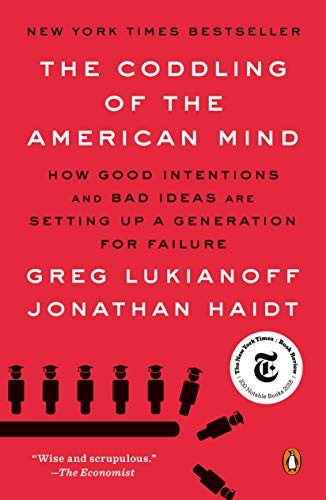
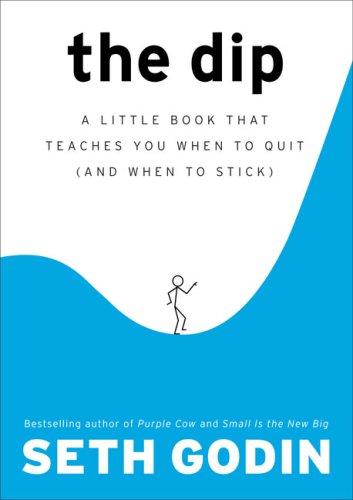
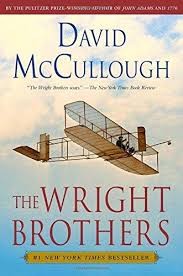


delivered
Get key takeaways from each episode delivered to your inbox.